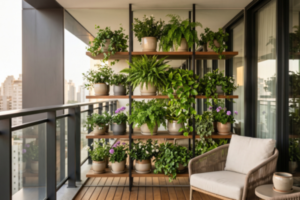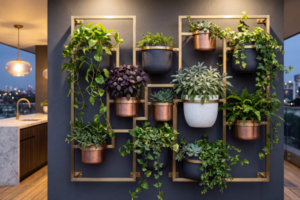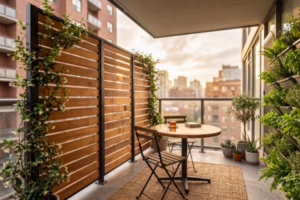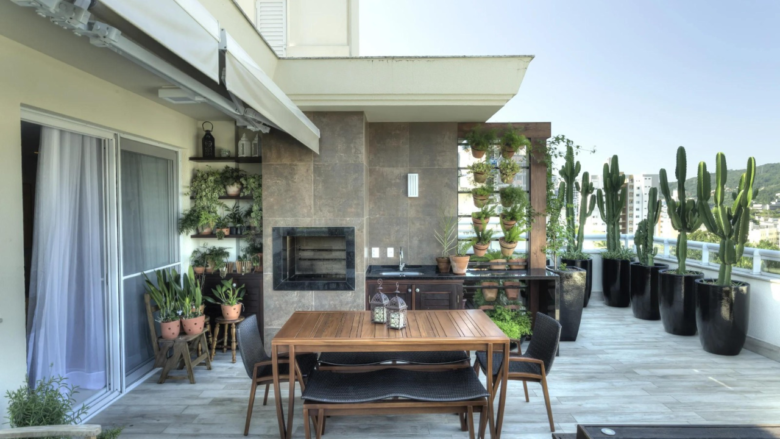
Vertical gardens with wood and stone have become one of the most sought-after design combinations for outdoor spaces, and it is easy to understand why. Living greenery next to the warmth of natural wood and the solid presence of stone creates something that feels both grounded and alive — and that contrast is exactly what makes a balcony feel like a real retreat.
Texture is the secret ingredient that most people overlook. We tend to focus on color schemes, furniture layout, or plant selection, yet it is texture that gives a space its personality. The roughness of a stone cladding panel set against a cedar-plank wall—softened by trailing ferns and climbing pothos—creates a sensory experience that no single material could provide on its own.
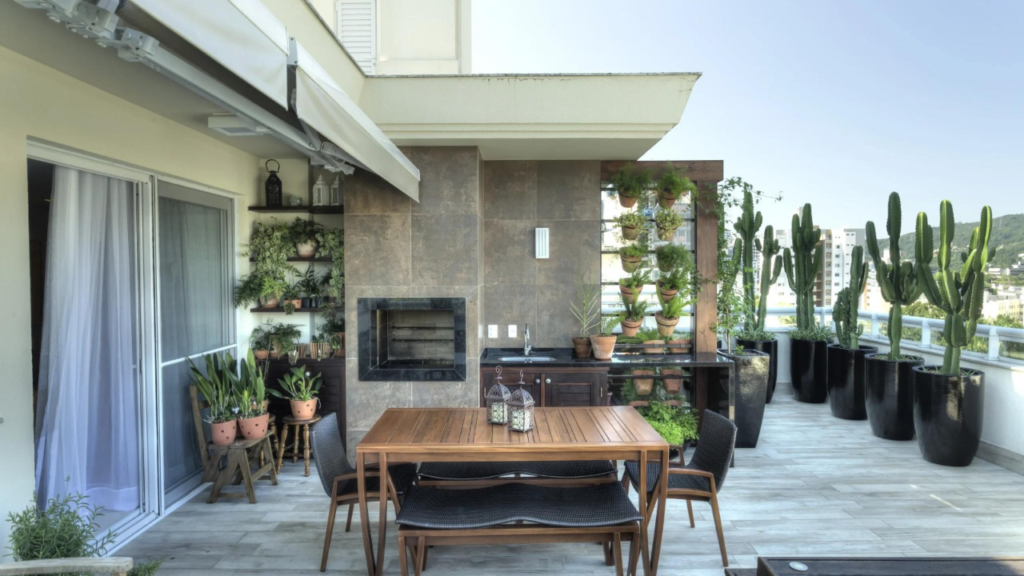
Whether you have a small city balcony or a spacious terrace, the principles in this article will help you build a layered outdoor space that feels intentional and welcoming — without any of it being complicated.
Vertical Gardens with Wood and Stone: Why This Trio Works So Well
There is a reason designers keep coming back to this combination. Each of the three elements — plants, wood, and stone — carries a distinct visual weight and surface quality. Plants bring movement, softness, and color variation.
Wood adds warmth and a handcrafted feeling. Stone grounds everything with permanence and visual strength. Together, they create what designers call a full sensory palette, meaning your eye never gets bored and the space never feels flat.
Think about a simple example. Imagine a narrow city balcony with plain white walls and a basic metal railing. Now picture that same balcony styled around vertical gardens with wood and stone: a living plant wall on one side, a horizontal cedar slat screen on another, and a low ledge faced with stacked slate.
The bones of the space are identical, but the second version feels like a completely different place. That transformation happens entirely through texture and material layering, without changing the furniture or the square footage.
From a practical standpoint, this trio also makes sense because each element performs a function beyond aesthetics. The vertical garden improves air quality, reduces heat absorption on the wall behind it, and provides a degree of privacy.
The wood elements add insulation value and can serve as windbreaks or shade structures. The stone surfaces are incredibly durable outdoors, resistant to UV fading and moisture, and they require very little upkeep once installed.
Choosing the Right Plants for a Textured Balcony Wall
Before you pick a single plant, take a good look at your balcony’s light conditions throughout the day. This is the step most people skip, and it leads to a lot of frustration down the road. A north-facing balcony in Chicago gets very different light from a south-facing one in Dallas, and your plant choices need to reflect that reality.
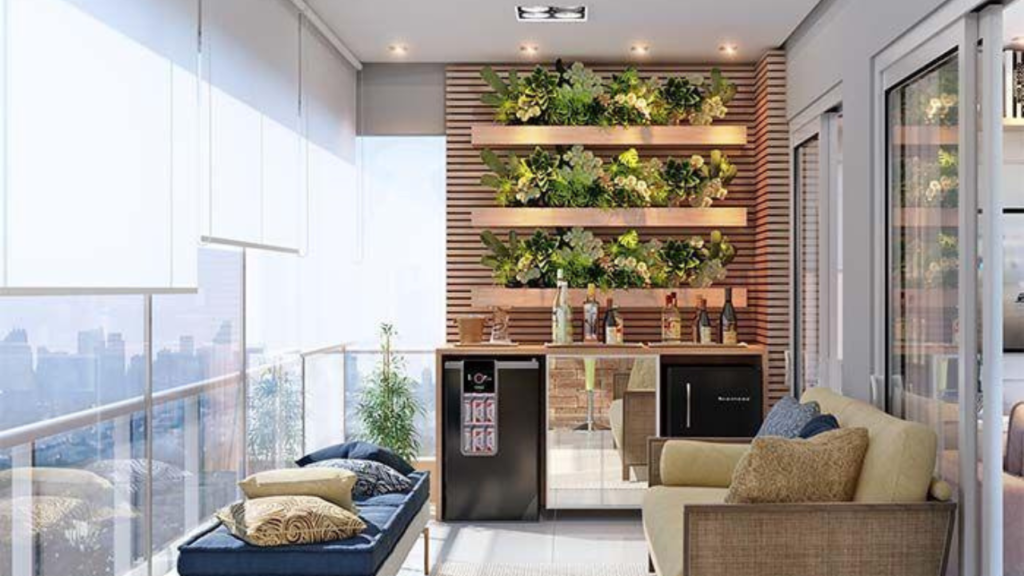
For balconies with strong direct sun, think about Mediterranean herbs like rosemary and thyme, which add texture through their fine needle-like leaves, along with succulents such as sedums and echeverias for a layered, almost sculptural surface.
These plants thrive with minimal water once established, which matters a lot when your garden is attached to a vertical structure where drainage needs to be carefully managed.
For shadier spaces, ferns, peace lilies, and heartleaf philodendrons are among the best choices for vertical gardens with wood and stone — their lush, deep green foliage contrasts beautifully with the heavier textures of both materials behind them.
The surface texture of the leaves themselves plays a big role in how the wall looks up close. Mixing smooth, glossy leaves like those of a wax plant with rough, matte ones like lamb’s ear creates a tactile wall that invites touch and holds visual interest throughout the day as light shifts across the surface.
How to layer plant textures for maximum visual depth
- Place large-leafed plants like elephant ears or hostas toward the base of the wall, where they anchor the composition.
- Use mid-sized trailing plants like string of pearls or creeping jenny in the middle sections to add movement.
- Reserve fine-leafed or tightly clumped plants like moss, thyme, or baby’s tears for upper sections where detail reads well against the sky.
- Add one or two architectural plants such as a small ornamental grass or a compact bird of paradise to break the rhythm and draw the eye.
This layering approach mirrors how plants naturally organize themselves in the wild, with taller structural plants above and ground-hugging species below. Applied to a vertical surface, it creates a wall that looks like it grew that way naturally rather than being installed last weekend.
Working with Wood on a Balcony: Finish, Species, and Placement
Wood on a balcony is a commitment, and that is not a bad thing. It asks you to maintain it, seal it, and occasionally refinish it, but in return it gives you something that no composite or synthetic material can replicate: genuine warmth that changes with age and weather.
When done right, wood is the element that ties vertical gardens with wood and stone together — bridging the softness of living plants and the solidity of stone into something that feels cohesive and warm.
Cedar is a popular first choice for balcony wood elements, and for good reason. It is naturally resistant to moisture and insects, it takes stains and sealers beautifully, and its reddish-brown tone pairs with almost every plant palette.
Teak is another outstanding option if your budget allows, offering exceptional durability and a warm honey tone that weathers to a distinguished silver-gray if left untreated. Ipe, sometimes called Brazilian walnut, is among the hardest and most weather-resistant woods available, and its deep chocolate tones work particularly well when paired with lighter stone finishes like limestone or travertine.
Placement matters as much as species selection. Wood used as a horizontal slat screen creates a sense of enclosure and privacy while still allowing air to circulate. Used as decking underfoot, it brings the eye down and grounds the space. Used as a planter box surround or a built-in bench frame, it adds practical function while contributing to the overall textural mix.
Matching wood tones to your stone and plant palette
The relationship between your wood tone and your stone choice sets the overall mood of the space. Here is a practical way to think about it.
Warm wood tones like cedar, teak, and pine work best with warm-toned stones such as sandstone, buff limestone, or terracotta. This pairing creates a cohesive, sun-warmed atmosphere that feels inviting and slightly Mediterranean in character.
Cool wood tones like weathered gray teak or silver-gray driftwood finishes pair well with cooler stones such as slate, bluestone, or dark granite. The result is a more contemporary, restrained aesthetic that lets the plants provide all the warmth and color.
If you want a high-contrast look, pair a very dark wood finish — like a charcoal-stained cedar — with a pale stone like white quartzite or light travertine. The drama comes from the tonal contrast, and your green plant wall acts as the mediator between the two extremes.
Stone on the Balcony: Cladding, Pavers, and Accent Surfaces
Stone brings something to a balcony that no other material does: visual permanence. Even a small amount of real stone — or a high-quality stone-look porcelain panel — creates an anchor point that makes the entire space feel more solid and intentional. The key is knowing how and where to use it.
The most popular application is stone cladding on a feature wall. This involves applying thin-cut stone panels or stacked ledger stone to one wall of the balcony, usually the back wall or the wall that faces you as you step outside.
This creates an immediate focal point and a textural backdrop against which your plants and wood elements can really stand out. Ledger stone — which consists of small pieces of stone stacked in a horizontal pattern — is particularly popular because it adds depth and shadow lines that change throughout the day as the sun moves.
Stone pavers on the floor are another powerful option. Large-format slate or travertine pavers underfoot create a strong textural foundation and are extremely durable in outdoor conditions. When paired with wood decking in a mixed-pattern layout — where stone sections alternate with wood sections — you get a floor that tells a design story from the ground up.
Stone types best suited for balcony use
Not all stone performs equally well outdoors, particularly on balconies where weight, drainage, and freeze-thaw cycles are real concerns.
Slate is one of the best performers. It is dense, absorbs very little moisture, splits naturally into flat panels, and is available in a range of colors from charcoal to rusty orange. Slate pairs especially well with dark wood tones and deep green plant walls.
Travertine is warm, creamy, and full of natural variation. It is heavier than slate and does require sealing to prevent moisture penetration, but its earthy tones create a beautiful Mediterranean mood that works wonderfully in warmer climates.
Porcelain panels designed to mimic stone have improved dramatically in quality and are now a genuinely attractive option for upper-floor balconies where structural weight is a concern. Modern large-format porcelain tiles can be virtually indistinguishable from real stone at a fraction of the weight.
Designing a Modular Vertical Garden for Gourmet Balconies
A modular vertical garden for gourmet balconies takes the living wall concept and gives it a practical culinary purpose. Instead of purely ornamental plants, you fill your wall panels with herbs, edible flowers, small pepper plants, and compact leafy greens. The result is a wall that looks stunning and actually feeds you — a pretty compelling combination.
The modular approach works well because it is flexible. You can start with a few panels and expand over time. You can swap out panels when a plant finishes its season. You can rearrange the configuration to try different groupings. Most modular systems use individual pockets or trays that clip into a main frame, so adding or removing sections takes minutes rather than hours.
For a gourmet-focused wall, think about grouping plants by culinary use rather than by visual similarity alone. A cocktail section might hold mint, lemon balm, and lime basil. An Italian section could feature flat-leaf parsley, oregano, and cherry tomatoes. A tea section might include chamomile, lemon verbena, and spearmint. These groupings make the wall more functional and give it a story that goes beyond pure decoration.
The stone and wood backdrop matters even more for a gourmet wall because it serves as a display surface for something you actually harvest.
This is where vertical gardens with wood and stone really earn their place — a warm-toned cedar frame around a set of modular herb panels, mounted against a stone-clad wall, looks like something from a high-end restaurant kitchen garden, and it is entirely achievable on a standard apartment balcony.
Balancing All Three Elements: Layout and Proportion
Getting the balance right between plants, wood, and stone is where a good design becomes a great one. The challenge is that each element has strong visual weight, and too much of any one of them can feel overwhelming. The goal is to let each material breathe and to create clear visual transitions between them.
A reliable starting point is the 60-30-10 rule adapted for balcony textures. Let one material dominate at about 60 percent of the visual field, use a second material at about 30 percent, and let the third appear as an accent at roughly 10 percent.
For example, if your plant wall covers the majority of one full wall, your wood elements occupy the flooring and a partial screen, and your stone appears only as a ledge or planter trim, you have a well-proportioned composition.
Transitions between materials are just as important as the materials themselves. Where wood meets stone, consider leaving a small planting gap where trailing plants can grow out and soften the hard edge.
Where the plant wall ends and a plain wall begins, use a wooden frame or border to give the garden a finished edge that relates to the other wood elements in the space. These small connective details are what separate a considered design from one that simply places materials next to each other without relationship.
Lighting Strategies That Enhance Texture After Dark
One of the most underused opportunities in balcony design is nighttime lighting. During the day, natural light does all the work of revealing texture. After dark, your artificial lighting choices determine whether the space comes alive or disappears into a flat, undifferentiated glow.
For plant walls, the most effective approach is to use small LED spotlights mounted at the base of the wall, angled upward. This technique, called grazing, skims the light across the surface of the leaves, highlighting their texture and casting small shadows that give the wall incredible depth.
The same grazing technique works even better on stone walls, where the shadows created in the joints and surface irregularities of stacked ledger stone create a dramatic, almost theatrical effect.
For wood elements like slat screens or decking, warm-white LED strips tucked along the back edge or underneath the planks create a soft glow that reveals the grain and warmth of the wood without washing out the other elements.
The key throughout is to use warm-white bulbs in the 2700K to 3000K range, which complements natural materials far better than cool or neutral white light, which tends to make outdoor spaces feel clinical rather than inviting.
Maintenance Tips for Each Material in a Mixed-Texture Balcony
The beauty of vertical gardens with wood and stone is that each material has straightforward maintenance requirements that do not conflict with each other, as long as you plan your watering and drainage system carefully from the start.
For the plant wall, the single most important thing you can do is install a drip irrigation system from day one. Manual watering of a vertical garden is time-consuming and uneven. A simple timer-controlled drip system keeps moisture consistent, prevents overwatering, and reduces the risk of water running down your wood and stone surfaces — which is the main cause of staining and decay over time.
For wood surfaces, an annual application of a high-quality exterior wood oil or sealant is typically all that is needed to keep the material looking good and protected. Do this in early spring before the growing season begins. Check for any cracked or warped sections and replace individual boards as needed before they create larger problems.
For stone, the main requirement is periodic cleaning to remove algae or moss growth, which can make surfaces slippery and degrade the look of the material over time. A diluted oxygen bleach solution applied with a stiff brush and rinsed thoroughly is effective and safe for the surrounding plants. Natural stone like travertine should be resealed every two to three years to maintain its resistance to staining.
FAQ: Common Questions About Balcony Texture Design
These are the questions we hear most often from readers who are just starting to plan their textured balcony. Whether you are working with a compact city apartment or a more generous terrace, the answers below cover the practical concerns that tend to come up before the first material is chosen or the first panel is installed.
Can I combine wood and stone on a small apartment balcony without it feeling crowded?
Absolutely — and in fact smaller balconies often benefit more from this approach than larger ones. The key is to use materials vertically rather than spreading them across the floor. A single stone-clad back wall with a small modular plant section and a narrow cedar bench rail can create a rich, layered feeling without taking up any floor space at all.
What is the best low-maintenance vertical garden system for a balcony?
Felt pocket systems and modular plastic tray systems with built-in reservoirs are both excellent low-maintenance choices. Systems with self-watering reservoirs reduce watering frequency significantly, and felt pockets are surprisingly durable while allowing excellent drainage.
For a modular vertical garden for gourmet balconies, a tray-based system with individual sections tends to work best because it makes it easy to replace or rotate individual plants.
Does real stone add too much weight to a balcony?
This depends on your building’s load capacity, which is worth checking with a structural engineer or your building management if you plan to use large amounts of natural stone.
For most standard apartment balconies, thin-cut stone veneer panels — typically less than one inch thick — add very little weight and are widely used in urban settings. Alternatively, high-quality porcelain panels that replicate stone are an excellent lightweight substitute.
How do I prevent my wood decking or wall panels from rotting near a vertical garden?
The key is ensuring that your plant wall system has proper backing and drainage so that water does not saturate the wood surface directly behind or beneath it. Use a moisture barrier between the plant system and any wood it is mounted against.
Choose naturally rot-resistant species like cedar, teak, or ipe, and ensure adequate air circulation behind all wood panels to allow them to dry between watering cycles.
Which plants work best on a shaded balcony with a stone wall backdrop?
Shade-tolerant plants like ferns, pothos, peace lilies, English ivy, and heartleaf philodendrons are excellent performers in low-light conditions. They also tend to have lush, deep green foliage that contrasts beautifully with the gray and brown tones of most stone surfaces.
Adding a few varieties of variegated plants — like the white-and-green pothos or the cream-edged hosta — brings some light into the composition without needing direct sun.
Can I install a vertical garden on a rented balcony without damaging the walls?
Yes, with the right approach. Freestanding modular plant wall frames that stand independently without wall mounting are widely available and completely non-destructive.
These frames can be positioned against a wall without attaching to it and removed cleanly when you move. Some systems use floor-to-ceiling tension poles similar to curtain rods, which offer good stability with zero wall damage.
Bringing It All Together: A Space That Reflects Who You Are
At the end of the day, the most successful balcony designs are the ones that feel personal. The combination of vertical gardens with wood and stone gives you a rich visual language to work with, but what you say with that language is entirely up to you.
Someone who loves minimalist Japanese aesthetics might pair a single wall of green moss with pale concrete panels and a single strip of dark bamboo. Someone drawn to the warmth of Tuscany might fill their wall with herbs and climbing roses, surround them with warm sandstone cladding, and add a weathered olive wood table.
The principles covered in this article — choosing complementary textures, balancing proportions, planning lighting, and maintaining each material correctly — are tools, not rules. Use them as a starting framework and then trust your own taste to guide the final decisions.
Take photos of outdoor spaces you love, whether from travel, from design accounts, or from your own neighborhood, and look at what they have in common. You will likely find that the spaces that draw you in consistently use layered textures rather than single materials, and that the ones you remember long after you leave them have some combination of living green, warm wood, and solid stone.
Your balcony, no matter its size, has the potential to become a genuine sanctuary. A place where you actually want to spend time, where a morning coffee feels different and an evening glass of wine becomes a small ritual.
The right combination of vertical greenery, natural wood, and textured stone surfaces will not just improve how the balcony looks. It will change how you feel when you step outside.
If this article sparked some ideas for your own outdoor space, take a look at the other posts on this blog covering outdoor furniture pairing, container gardening for small spaces, and lighting design for terraces and patios. Until next time.