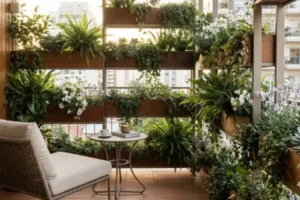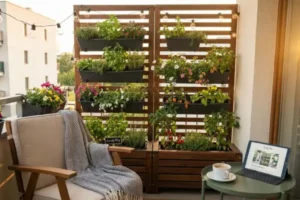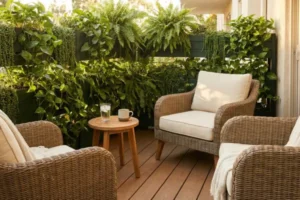
A balcony decor modular vertical garden might just be the single best upgrade you can make to an outdoor living space that feels cramped, plain, or uninspired. Whether you have a tiny apartment balcony in Chicago or a generous wraparound terrace in Austin, adding a vertical garden layer immediately changes the entire personality of the space.
You do not need a landscape designer or a hefty renovation budget to pull this off. Modular vertical garden systems are designed for people who want flexibility, easy installation, and a result that actually looks intentional and put-together. The secret is knowing how to combine the right elements so everything feels like it belongs together.
That is exactly what this article is here for. By the time you finish reading, you will have a solid game plan for building a vertical garden on your balcony that looks cohesive, feels personal, and actually stays alive and thriving season after season.
Balcony Decor Modular Vertical Garden: Understanding the Concept Before You Start
Before you order a single planter pocket or wall panel, it helps to understand what a modular vertical garden actually is and why it works so well in balcony settings. A modular system is made up of individual, interchangeable units, think wall-mounted pockets, stacking planter frames, interlocking tile panels, or grid systems, that you can arrange, swap out, and reconfigure over time.
What makes this approach so appealing for balconies specifically is the space efficiency. Most American apartment balconies range from about 40 to 80 square feet, which means floor space is precious. Going vertical means you are not sacrificing a single square inch of walking room.
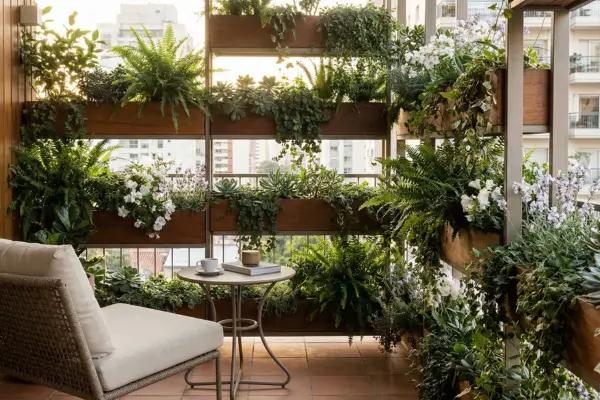
You get the lush, garden feel without the crowding. And because the units are modular, you can start small with just a few panels and expand gradually as your confidence and budget grow.
Now, cohesion is where most people stumble. They buy a few planters here, a wall pocket there, and end up with something that looks more like a garage sale than a curated outdoor space. Achieving a cohesive look means thinking about your vertical garden as a design system, not just a collection of plants. Color, material, plant selection, spacing, and the relationship between the garden and your other balcony decor all have to work together.
Why Modular Systems Beat Traditional Planters for Balconies
Traditional planters are excellent in the right context, but they have real limitations on a balcony. They take up floor space, they can be heavy, and once you set them down, moving them around is a whole project. Modular vertical garden panels, on the other hand, attach to walls, railings, or freestanding frames, keeping your floor clear and your layout flexible.
Think about someone like my neighbor Sara, who has a narrow balcony in a Philadelphia rowhouse. She tried floor planters for two seasons and always felt like she was squeezing past them to get to her chair. She switched to a railing-mounted modular system with staggered planter pockets, and suddenly the balcony felt twice as big. The plants were at eye level, the floor was open, and the whole space looked designed rather than default.
Planning Your Layout: The Foundation of a Cohesive Design
Good design always starts on paper, or at least in your head, before it starts on the wall. Rushing to install panels without a layout plan is one of the most common mistakes people make, and it almost always results in a look that feels random or unbalanced. Take a step back and treat your balcony like a canvas.
Start by measuring your available vertical surfaces. Note which walls get direct sun, which are in shade, and which are exposed to wind. These environmental factors will determine not just where you place your panels but which plants will actually survive in each location. A sun-drenched south-facing wall in Phoenix calls for completely different plants than a shaded north-facing wall in Seattle.
Mapping Zones on Your Balcony
One of the most effective planning techniques is to divide your balcony into loose zones: a seating zone, a dining or grilling zone if you have one, and a green zone. Your balcony decor modular vertical garden should anchor or frame one or more of these zones rather than being scattered randomly across every available surface.
For example, if you have a small bistro table and two chairs against one wall, consider building your vertical garden on the wall directly behind or beside the seating area. This turns the garden into a living backdrop, which instantly elevates the entire vibe. It feels like a restaurant patio rather than a random apartment balcony.
That backdrop effect is one of the most powerful tools in outdoor decorating, and a modular vertical system is one of the easiest ways to achieve it.
Thinking About Visual Weight and Balance
Visual weight refers to how heavy or full a section of your design feels compared to others. A tall, densely planted wall panel has a lot of visual weight. A single small railing planter has very little. For a cohesive look, you want to distribute visual weight in a way that feels intentional and balanced, even if it is not perfectly symmetrical.
Asymmetry can absolutely work, and often looks more natural and relaxed than a rigid grid. The key is that your arrangement should feel like it was planned, not like you ran out of panels on one side.
A good rule of thumb is to anchor heavy visual elements, like a large panel of lush trailing plants, with lighter elements on the opposite side, like a simple wall-mounted herb strip or a small decorative lantern.
Choosing the Right Modular System for Your Space
The American market has no shortage of modular vertical garden products, which is great for options but can feel overwhelming when you are trying to make a decision. The right system for your balcony depends on four main factors: your wall or railing type, your weight tolerance, your budget, and the overall style you are going for.
Weight is a factor that people often underestimate. Soil, water, and plants add up fast. A fully planted modular panel can weigh 20 to 40 pounds or more depending on the size and soil type. Before you commit to a wall-mounted system, check whether your balcony railing or wall surface can handle that load.
Many apartment leases also have restrictions on drilling into walls, so railing-mount or freestanding frame systems are often the more practical choice for renters.
Popular System Types Worth Knowing
There are a few main categories of modular vertical garden systems on the market today, and each has its own strengths.
Wall panel systems use a grid or frame that mounts flat against a wall, with individual planter pockets or cells that slot in. These give you the most control over plant placement and tend to look the most intentional and designed. Brands like Woolly Pocket, elho, and Lechuza offer popular options in this category.
Railing planter systems clip or hang directly onto your balcony railing and often include stacking or interlocking features that let you build upward as well as along the railing. These are ideal for renters or anyone who cannot or does not want to drill into walls.
Freestanding modular towers and frames are standalone structures that you place on the balcony floor. They offer the most flexibility since you can move them around, but they do take up some floor space, so they work best on larger balconies.
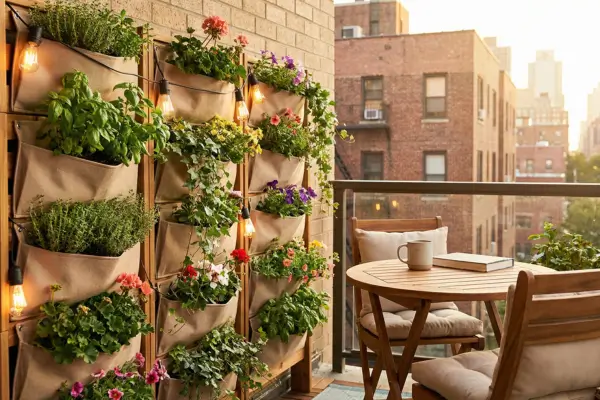
Pocket systems, like felt or fabric wall pockets, are lightweight, inexpensive, and very easy to install. They have a more casual, bohemian look and work beautifully for herbs and small trailing plants.
Plant Selection: The Biggest Factor in Achieving a Cohesive Look
Here is a truth that experienced gardeners know well: the container is the frame, but the plant is the painting. You can have the most stylish modular system in the world, and if your plant selection is all over the place, the result will feel chaotic. Cohesive plant selection is just as important as cohesive hardware.
The approach that works best for most people is choosing a plant palette rather than individual plants. A plant palette is a curated collection of species that share at least one visual characteristic, whether that is leaf color, texture, size, or growth habit. Think of it the same way an interior designer thinks about a color palette for a room.
Building a Plant Palette That Works Together
A simple and reliable palette strategy is the thriller, filler, spiller method. Thrillers are your tall, dramatic focal plants, ornamental grasses, upright herbs like rosemary, or bold-leafed tropicals for shadier spots. Fillers are medium-height plants that fill in the middle ground, compact basil, petunias, impatiens, or succulents work well here.
Spillers are trailing plants that cascade downward, adding movement and softness, sweet potato vine, trailing nasturtium, ivy, and lobelia are all excellent choices.
When you repeat this combination across multiple panels of your balcony decor modular vertical garden, the whole wall starts to feel intentional and lush rather than random. You do not have to use the exact same plants in every pocket, but keeping within your chosen palette creates visual rhythm. Think of it like wearing a coordinated outfit. The pieces do not all have to match, but they should speak the same design language.
Best Plants for American Balcony Vertical Gardens by Region
Climate matters enormously for balcony gardening, and the United States covers a huge range of growing conditions. Here is a practical breakdown to guide your plant choices:
Hot and dry climates, like those found in Arizona, Nevada, and Southern California, call for drought-tolerant options. Sedums, echeverias, portulaca, and herbs like thyme and oregano are reliable performers. They look beautiful and ask very little of you in return.
The humid climates of the Southeast, in states like Florida, Georgia, and Louisiana, are perfect for lush tropical foliage. Caladiums, ferns, coleus, and ornamental sweet potatoes thrive in the heat and humidity, giving your vertical garden that rich, layered look that draws attention.
Cooler northern climates in places like Minnesota, Wisconsin, and New England have shorter growing seasons, but spring through fall can be spectacular. Pansies, violas, herbs, and cool-season lettuces are great for spring and fall, while impatiens, fuchsia, and begonias carry you beautifully through summer.
Moderate climates in the Pacific Northwest and mid-Atlantic states give you the most flexibility. You can grow almost anything in a Seattle or Washington D.C. balcony garden, though you will want to pay attention to light levels since these regions often have significant cloud cover.
Color, Material, and Style: Making Everything Feel Like It Belongs
A balcony decor modular vertical garden that truly looks cohesive is one where the garden itself and the rest of your balcony decor feel like they came from the same creative vision. This means thinking beyond the plants and considering how your planter system interacts with your furniture, rugs, lighting, and any other decorative elements in the space.
Start with your existing balcony palette. If you have warm wood-toned furniture, wicker accents, and earthy textiles, a modular system in terracotta tones, warm gray, or natural fiber pockets will feel completely at home.
If your balcony has a more modern, minimalist vibe with clean lines, metal furniture, and monochromatic textiles, a sleek black or white wall panel system will look sharp and intentional.
The Role of Containers and Hardware Finish
One detail that makes an enormous difference is consistency in your container material and finish. Mixing terracotta pots with glossy white plastic troughs and raw concrete planters in the same small space creates visual noise. When everything comes from a single material family, the eye can relax and take in the space as a whole rather than jumping from one mismatched piece to another.
This does not mean everything has to be identical. Variation in size, height, and plant type is exactly what keeps a vertical garden interesting. But keeping your hardware in the same material family, all metal, all ceramic, all woven fiber, or all composite resin, creates the underlying visual consistency that makes the whole thing feel designed.
Lighting Your Vertical Garden for Evening Ambiance
One aspect of balcony vertical gardens that often gets overlooked is evening lighting, and it is honestly one of the most enjoyable details to get right. String lights woven through a modular vertical garden panel create a warm, magical effect after dark.
Small clip-on spotlights or solar stake lights tucked into the pockets add dimension and make your plants visible and beautiful well past sunset.
For a modular vertical garden for gourmet balconies, where the space doubles as an outdoor dining or entertaining area, good lighting is not optional. It sets the entire mood. Warm white Edison-style string lights paired with lush green foliage and soft candlelight on the table creates an atmosphere that no restaurant can easily replicate.
Maintenance and Watering: Keeping Your Vertical Garden Looking Its Best
Let’s be real for a moment. A vertical garden only looks as good as you keep it. And one of the most common reasons people give up on balcony gardens is that the watering becomes a hassle. Modular vertical systems, because of their vertical orientation, tend to dry out faster than ground-level planters. The top pockets especially can dry out in a day or two during hot weather.
The best solution most experienced balcony gardeners arrive at is a drip irrigation system. Modern drip kits designed for vertical gardens are inexpensive, easy to set up, and can be connected to a simple timer so you never have to worry about forgetting to water.
Brands like Rain Bird and DIG offer starter kits that work well with most modular panel systems, and they are widely available at Home Depot and Loweisons.
Seasonal Care and Replanting
One of the real advantages of a modular system is how easy it makes seasonal transitions. In late fall, you simply pull out your summer annuals, refresh the potting mix if needed, and slot in cool-season plants.
No digging, no heavy pots to wrestle. This flexibility makes it genuinely easy to keep your balcony decor modular vertical garden looking intentional and well-maintained year round rather than going bare and sad in October.
A practical tip that saves a lot of time is to keep a small stash of backup plants or potted seedlings on hand. When one pocket starts looking tired or a plant does not make it through a heat wave, you can swap it out immediately. This keeps the overall look full and healthy without waiting for a major replanting session.
Designing a Modular Vertical Garden for Gourmet Balconies
If your balcony serves as an outdoor kitchen or entertaining space, the design stakes go up a notch. A modular vertical garden for gourmet balconies needs to work harder than a purely decorative setup. It has to look beautiful, yes, but it also has to be practical, easy to access, and ideally contribute something useful to your cooking.
Edible vertical gardens are one of the most satisfying design choices you can make for a gourmet balcony. Imagine stepping out to your balcony to snip fresh basil for your pasta, grab a handful of cherry tomatoes for a salad, or clip some mint for a cocktail.
When your herb and edible garden is built into a modular wall system at eye level, it becomes both a design feature and a genuinely useful part of your kitchen routine.
Combining Edible and Ornamental Plants
The good news is that edible and ornamental plants can absolutely coexist in the same modular vertical garden, and the combination is often more beautiful than going all-ornamental. Herbs like purple basil, variegated thyme, and bronze fennel are as gorgeous as any flowering annual.
Strawberry plants produce beautiful white flowers before the fruit. Kale and Swiss chard come in rich jewel tones that rival any ornamental foliage.
The key to making this combination feel cohesive rather than random is to treat your edibles as intentional design elements rather than afterthoughts. Give them the same placement consideration you would give any other plant in the palette. Position them at accessible heights, group them by water and light needs, and choose varieties that are visually appealing as well as tasty.
Frequently Asked Questions About Balcony Vertical Gardens
People across the United States search Google every day with questions about balcony vertical gardens, and many of those questions come up again and again. If you still have a few things you are wondering about, there is a good chance one of the answers below covers it.
How do I attach a modular vertical garden to my apartment balcony without drilling?
This is one of the most searched questions on the topic, and it makes sense since most renters cannot or do not want to put holes in their walls. The best options are railing-mount systems that clamp or hook directly onto your balcony railing, freestanding frame systems that sit on the floor with no wall attachment needed, and tension rod setups that wedge between the floor and ceiling without any hardware.
What is the best potting mix for a vertical modular garden?
Standard potting soil tends to be too heavy for vertical planters because it compacts over time and can cause drainage issues. A better choice is a lightweight potting mix blended with perlite, which improves drainage and reduces weight. Some gardeners also add coco coir to help the mix retain just enough moisture without becoming waterlogged. Avoid using garden soil or topsoil in vertical planters entirely.
How often do I need to water a balcony vertical garden?
This depends heavily on your climate, sun exposure, and plant selection, but as a general guideline, most vertical planters need watering every one to two days in warm weather, with the top pockets often drying out faster than lower ones. A drip irrigation system with a timer is by far the most reliable solution for keeping moisture levels consistent without constant manual watering.
Can I grow vegetables in a balcony modular vertical garden?
Absolutely, and many people do with great results. Compact and trailing varieties work best: cherry tomatoes, lettuce, spinach, herbs, strawberries, peppers, and green onions all perform well in modular vertical systems. The main limitation is root depth, so stick with plants that have relatively shallow root systems and avoid large root vegetables like carrots or beets.
How do I make my balcony vertical garden look less cluttered?
The most effective fix for a cluttered-looking vertical garden is to edit ruthlessly and commit to a plant palette. Remove plants that do not fit your color or texture scheme, leave some intentional negative space between panels, and make sure your hardware is consistent in material and finish. Cohesion almost always comes from subtraction rather than addition.
What are the best vertical garden systems available in the United States?
Some of the most well-regarded options currently available in the U.S. market include the Woolly Pocket Living Wall Planter, the Mr. Stacky Smart Farm Vertical Planter, the elho Soft Brick vertical wall planter, the Greenstalk Vertical Planter Tower for edibles, and the Veradek Metallic Series railing planters for a modern look. Each serves a slightly different style and budget, so the best choice depends on your specific setup.
Wrapping Up: Your Balcony Can Be a Living Work of Art
Building a balcony decor modular vertical garden that truly looks cohesive is not about having the biggest budget or the greenest thumb. It is about making intentional choices and treating your outdoor space with the same design care you would bring to any room in your home.
The approach we have walked through here, from layout planning to plant palettes and consistent materials, works whether your balcony is a modest perch in Brooklyn or a rooftop terrace in Miami. Start small, stay intentional, and the results will surprise you.
Have you already started a vertical garden on your balcony, or are you just getting started? Drop a comment below and share what you are working with. And if this article was helpful, take a look at our other posts on outdoor decorating and small-space gardening.