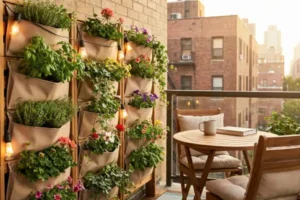
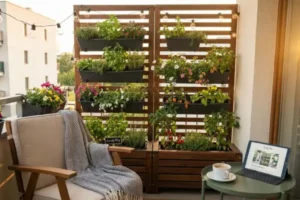
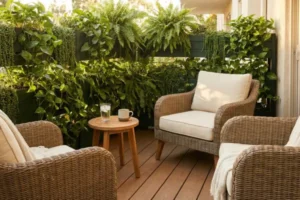
Color palettes modular vertical gardens balconies is one of those topics that sounds technical at first, but once you get into it, you realize it is mostly about making your outdoor space feel like it was always meant to look that way.
Most people focus on the plants themselves and forget that color is doing a lot of the heavy lifting. The shades of your foliage, the tones of your planters, the finish on your modular panels — all of it works together to create either a space you love spending time in or one that feels a little off, even if you cannot quite explain why.
This guide is here to help you get it right from the start. We will walk through color theory as it applies to living walls, how to match palettes to different balcony styles, what works in full sun versus shade, and how a well-planned modular vertical garden for gourmet balconies can look like it was designed by a professional.
Understanding Color Palettes Modular Vertical Gardens Balconies: The Basics First
When people think about vertical gardens, they usually think about greenery. And yes, green is the dominant color in most living walls. But the range within green alone is staggering. Think about the deep forest green of a fern next to the almost neon brightness of a pothos leaf, or the silvery sage of a lamb’s ear beside the warm olive of a sweet potato vine.
These differences matter more than most people realize. When planning color palettes modular vertical gardens balconies, it helps to understand how color affects perception in a small outdoor space before you even start picking plants or panels. Lighter, cooler tones tend to make a space feel larger and more open. Warm tones, like deep reds, burnt oranges, and golden yellows, create a cozier, more intimate feel.
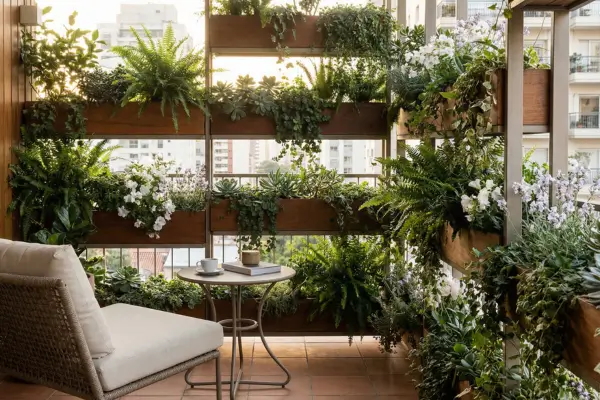
If your balcony is small, leaning into a palette of soft greens, creamy whites, and pale lavenders can actually make the space feel like it breathes. If you want drama, layering deep jewel tones against dark foliage can create a rich, luxurious backdrop that turns your balcony into something truly special.
Why Modular Systems Change the Color Game
Modular vertical garden systems give you something traditional planting does not: flexibility. With a modular setup, you can rearrange panels, swap out individual plant pockets, and update sections of your wall without tearing everything apart. This means your color palette is not locked in.
You can rotate plants as they bloom, remove sections that have faded, and introduce new hues as the seasons change. This level of control is one of the biggest reasons modular systems have become so popular for balcony gardens in the United States. Homeowners and renters alike appreciate being able to fine-tune the look without starting over.
And when it comes to color planning, that adaptability is genuinely freeing. You are not making a permanent decision. You are making a starting point.
The Role of the Module Frame and Panel Color
Here is something a lot of guides skip over: when working with color palettes modular vertical gardens balconies, the color of the modular panels themselves matters just as much as the plants you choose. If your frames are jet black, they will create strong contrast and make plant colors pop.
Warm wood tones will give your living wall a more organic, natural feel. White or light gray frames tend to blend into walls more easily and let the plants do all the talking.
Take a moment before purchasing to hold sample frame colors up against your balcony wall and your intended plant palette. What looks great in a photo online might compete with your existing railing finish or tile color in real life. This small step can save you from a costly mistake later on.
Matching Your Color Palette to Your Balcony Style
Every balcony has a personality, even if the person living there has not defined it yet. A sleek modern high-rise balcony has different design needs than a warm, rustic patio attached to a craftsman home. Getting the color palette right means reading the existing language of your space and building the vertical garden into it rather than against it.
A modern or minimalist balcony tends to look best with a tightly controlled palette. Think two or three shades of green, one accent color from flowering plants, and clean modular frames in black, white, or brushed metal. Adding too many plant varieties or too many competing colors will undermine the simplicity that makes that style work.
A great example of this done well is a Chicago rooftop balcony with gunmetal gray panels, pothos in varying shades of green, and a single row of white-blooming peace lilies running horizontally across the center. Clean, intentional, and striking.
Warm and Mediterranean-Inspired Balconies
If your outdoor space leans warmer, with terracotta pots, wood accents, or warm-toned stone flooring, you have a lot of room to play with richer plant colors. Warm palettes pair well with deep burgundy heucheras, golden creeping jenny, orange-tipped bromeliads, and herbs like bronze fennel or purple basil. The result feels layered and full without being chaotic.
A modular vertical garden for gourmet balconies fits especially well into this Mediterranean-inspired category. When you combine culinary herbs, trailing edible flowers, and small pepper plants in a warm-toned arrangement, you get something that is both beautiful and practical.
The rusty reds and greens of growing vegetables next to the silvery tones of rosemary and thyme create a palette that feels like it belongs on a Tuscan terrace. Have you ever walked into a kitchen garden and felt like you were somewhere in southern Europe? That is exactly the feeling a well-planned gourmet vertical wall can bring to your own backyard.
Cool and Coastal Palettes
Coastal-inspired balconies call for a different approach entirely. Soft blues, sandy neutrals, whites, and seafoam greens work beautifully here. For plant selection, look for plants with gray-green or blue-green foliage like echeveria, dusty miller, or blue star creeper.
White and pale yellow flowers from calibrachoa or alyssum can add brightness without disrupting the calm, airy feel. Frame colors for this style work best in weathered white, driftwood tones, or pale gray. Avoid dark frames in a coastal palette — they tend to feel too heavy against the light, breezy aesthetic that makes this style so appealing.
Bohemian and Eclectic Spaces
For the free spirits among us, a bohemian balcony is actually a great canvas for color palettes modular vertical gardens balconies because the style thrives on mixing. Here you can intentionally layer warm and cool tones, mix textures from waxy succulents to feathery grasses, and let color combinations that would feel too bold elsewhere become part of the charm.
The key to making eclectic work without looking messy is repetition. Pick three or four colors and repeat them across the wall in different plant varieties. A deep purple from tradescantia might echo in a cluster of lavender lower on the panel. A burnt orange succulent at the top finds a companion in a pot of orange nasturtiums in the corner.
Repetition creates visual rhythm, and that rhythm is what separates a thoughtful eclectic design from chaos.
Seasonal Color Planning for Vertical Balcony Gardens
One thing that catches people off guard with vertical gardens is how much the color palette can shift with the seasons. A wall that looks gorgeous in July can feel flat and dull by October if you have not planned for it. This is where modular systems really earn their value, because you can plan seasonal swaps without disrupting the whole structure.
In spring, soft pastels tend to dominate naturally. Many flowering plants bloom in pinks, pale yellows, and lilacs during this time, and those tones feel right for the season. Summer is when you can go bolder — deep greens are at their fullest, flowering plants like portulaca and million bells bring saturated color, and the long days give everything a vibrancy that almost takes care of itself.
Planning for Fall and Winter Color
Fall is where a little advance planning pays off. As summer bloomers fade, having plants with rich fall foliage already in your modular system means the color story continues rather than stops. Ornamental kale in purple and white, croton with its red and orange foliage, and golden mums can carry the warm palette into the cooler months beautifully.
Winter on a balcony in most parts of the United States can be tricky, but it is not hopeless. In warmer climates like Florida, Southern California, or the Gulf Coast, cool-season plants like pansies, snapdragons, and cyclamen keep the wall colorful through winter.
In colder regions, consider planting evergreen varieties like certain ferns, boxwood panels, or ornamental grasses that hold their structure even when temperatures drop. A mix of deep greens and grays with a few bright red berry branches woven in can make a winter wall look intentional and even elegant.
How Light Affects Color Perception on Your Balcony
This section matters more than people expect. Light plays a defining role in how color palettes modular vertical gardens balconies actually look in real life. The same plant can look dramatically different depending on how much direct sunlight hits your balcony and at what time of day.
A deep burgundy heuchera that looks rich and jewel-like in bright morning light can appear almost black in full afternoon shade.
A pale yellow fern that seems delicate and fresh in dappled light can wash out completely in direct noon sun. Before settling on your palette, spend a full day on your balcony noting how the light changes. Note which sections get direct sun in the morning, which are shaded by midday, and how the evening light hits the wall.
If your balcony faces east, it will get soft morning light and afternoon shade. West-facing balconies get intense afternoon and evening sun. South-facing balconies get the most sun overall, while north-facing ones rely almost entirely on indirect light. Knowing your orientation before you shop for plants can save you a lot of frustration.
Choosing Colors for Low-Light Balconies
Low-light balconies do not have to look dark or dull, but the approach needs to be thoughtful. The good news is that many low-light plants come with naturally interesting foliage colors. Think about the silver-splashed leaves of cast iron plants, the deep emerald of pothos, the burgundy undersides of certain prayer plants, and the dramatic stripes on calatheas.
For these spaces, build your palette around foliage rather than flowers, since most flowering plants need more sun than a shaded balcony can offer. Use lighter-colored frames to brighten the wall, and consider adding small solar-powered lights that wash the vertical garden with warm light in the evenings.
The result can be genuinely beautiful and moody in the best way. A shaded balcony does not have to apologize for what it lacks. With the right plants and palette, it can become one of the most atmospheric spaces in your home.
Sun-Drenched Balconies and Bold Color Choices
A south or west-facing balcony with full sun gives you the most plant options, but it also means more intense fading of color over time. Some foliage colors that are vibrant in spring can bleach out by late summer. To combat this, choose plants that are specifically labeled as heat-tolerant or fade-resistant.
Lean into colors that actually look better in intense light, like the silvery tones of dusty miller, the bright gold of creeping jenny, or the vivid reds and oranges of portulaca. These plants thrive under pressure and tend to get more interesting as the season progresses rather than less.
A modular vertical garden for gourmet balconies in full sun opens up the wonderful possibility of growing edible plants like cherry tomatoes, herbs, peppers, and edible flowers that also double as color accents. Imagine trailing nasturtiums in orange and yellow flowing down the lower panels while compact basil and purple sage fill in the upper sections. That is a color palette and a dinner ingredient list at the same time.
Practical Tips for Building a Cohesive Color Scheme
Getting the color palettes modular vertical gardens balconies palette right on paper is one thing, but executing it in the real world involves a few practical considerations that are easy to overlook. Start with a dominant color, usually a mid-tone green from your most used plant variety, and build outward from there.
Think of it the way an interior designer thinks about a room. You have a primary color that takes up the most space, a secondary color that complements and supports it, and one or two accent colors that add personality and visual interest without taking over. That simple framework eliminates a lot of the guesswork.
The 60-30-10 Rule Applied to Vertical Gardens
Interior designers love the 60-30-10 rule, and it works just as well for living walls. Sixty percent of your wall should be your dominant foliage color, typically the most neutral green in your plant selection. Thirty percent goes to your secondary color, which might be a deeper green, a silvery tone, or a textural contrast plant. The remaining ten percent is your accent, and this is where you get to have fun.
A good real-life example of this in action: a Brooklyn apartment balcony with a modular wall covered sixty percent in golden pothos, thirty percent in the deep green of philodendron heartleaf, and ten percent in the bright red of an anthurium cluster. The result was layered, interesting, and incredibly cohesive.
It did not feel like a random mix of plants. It felt designed. And that is exactly what a thoughtful ratio can do for your space.
Working With Contrast and Texture Together
Color contrast alone can feel flat without texture contrast to support it. Pairing a smooth, waxy leaf with a feathery, soft one makes both look more interesting. A fine-leafed herb like thyme sitting next to the broad, glossy leaf of a pepper plant creates visual interest that pure color matching cannot achieve on its own.
Think about the difference between placing a fine-textured gray fescue grass next to a bold-leafed hosta versus placing two similarly textured plants of different colors next to each other. The first combination has more visual energy because the eye is reacting to both the color difference and the texture difference at the same time. Always think in layers: color, texture, and form working together.
Common Color Mistakes to Avoid in Balcony Vertical Gardens
Even experienced gardeners make a few predictable missteps when planning color palettes modular vertical gardens balconies. Knowing what to watch for can save you a lot of replanting down the road.
Using too many colors is the most common issue. It is tempting when you are at the nursery to pick up every plant that catches your eye, but a wall with fifteen different leaf colors and eight different flower shades tends to look restless and unresolved. The eye needs somewhere to land and rest. Editing down to a tighter palette almost always produces a more satisfying result.
Another frequent mistake is ignoring the wall itself as a color. If your balcony wall is a warm brick red and you plan a palette of cool blues and silvers, those two things are going to fight each other. Either embrace the wall color and build the palette to complement it, or cover enough of it with the vertical garden that it becomes less of a factor. Neither option is wrong — but ignoring the issue is.
Frequently Asked Questions
If you have been reading this far, you probably have a few specific questions forming in your mind. The following answers are based on the real questions people search for most often when planning color palettes modular vertical gardens balconies. Hopefully they clear up some of the details that often get glossed over in general guides.
What are the best plant colors for a small balcony vertical garden?
For small spaces, lighter and cooler foliage tones are your best allies. Soft greens, silvery grays, and whites make the space feel larger and more open. Avoid filling a tiny balcony wall with too many dark, saturated colors, as they can make the space feel enclosed. One or two bold accent plants are fine, but keeping the majority of the palette light will help the space breathe.
How do I choose a color palette that works all year round?
The key is layering plants that have visual interest across different seasons. Start with evergreen foliage as your base, add seasonal bloomers as rotating accents, and choose frame and panel colors that complement plants in every season. Neutral frame tones like warm gray or natural wood work through any seasonal palette without feeling out of place.
Can I mix warm and cool tones in the same vertical garden?
Yes, but you need a bridging element. A plant with both warm and cool tones in its foliage, like a variegated plant with green and cream or a coleus with purple and orange, can serve as the visual bridge between warm and cool sections of the wall. Without that connector, the two halves can feel like they belong to different designs.
What colors work best for a modular vertical garden for gourmet balconies?
For a gourmet or culinary vertical garden, earthy and warm tones tend to feel most appropriate. Herb foliage naturally leans toward silvery greens, gray-greens, and deep forest greens, which are all rich and satisfying together. Adding pops of color from edible flowers like nasturtiums, violas, or borage gives the wall personality while keeping the overall feel grounded and natural.
How do I keep the color palette looking fresh as plants grow and change?
Modular systems make this easier than traditional fixed gardens. Plan for regular audits of your wall, maybe every six to eight weeks, where you assess which plants are thriving and which are fading or overpowering their neighbors. Swap out sections that have lost their color interest and rotate in seasonal plants to keep the palette feeling intentional rather than neglected.
Does the color of the balcony floor affect how the vertical garden looks?
More than most people realize. A warm terracotta tile floor will make cool-toned plants look cooler and more distinct, while a gray concrete floor can make a warm palette feel grounded and sophisticated. It is worth laying a few plant samples on the floor next to the wall before committing to a full installation to see how everything interacts in your actual space.
Are there color combinations I should always avoid in a vertical garden?
There are no absolute rules, but a few combinations consistently cause problems. High-contrast complementary colors like orange and blue or red and green can vibrate visually if they are used in large equal amounts next to each other.
They work better when one dominates and the other is used as a smaller accent. Also, very light and very dark colors placed directly next to each other without a mid-tone bridge can feel jarring rather than dramatic.
Wrapping It All Up
Getting the color palettes modular vertical gardens balconies equation right is one of the most satisfying parts of designing an outdoor space. When foliage tones, flowering accents, and frame colors all speak the same visual language, the result does not just look good — it feels good.
The best part about modular vertical garden systems is that you are never stuck. A living wall is always in motion, always giving you room to refine and improve. Most of the best-designed walls went through a few iterations before finding their final form.
Start simple, build from there, and remember that color in a garden is never just about beauty — it is about creating a place that reflects who you are. If this article helped you, leave a comment below and browse our other articles on balcony gardening and outdoor design for more ideas.