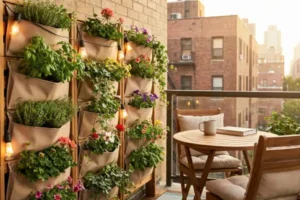
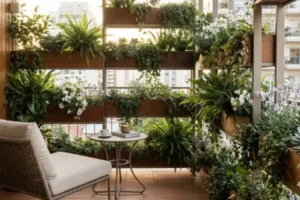
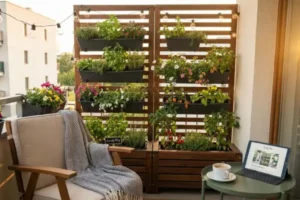
Outdoor furniture for a balcony vertical garden is one of those decisions that sounds simple at first but quickly reveals layers of thought, taste, and practicality. You want pieces that look good, hold up against the elements, and still leave enough room for your plants to breathe and grow.
Think about it this way: your balcony is essentially an outdoor room. The vertical garden is your living wall, your art piece, your green statement. The furniture you bring in should feel like it belongs in that space, not like it was dragged in from a different world entirely.
This guide walks you through everything you need to consider, from materials and scale to color palettes and layout ideas. By the time you finish reading, you will have a clear picture of exactly what works, what to avoid, and how to create a balcony that feels like a personal retreat.
Outdoor Furniture Balcony Vertical Garden: Understanding the Space Before You Shop
Before you fall in love with a particular chair or table set online, take a hard look at your actual space. This is where most people go wrong when thinking about outdoor furniture for a balcony vertical garden. They see a stunning photo on a home decor website, order something similar, and then realize it overwhelms the balcony or leaves no room for the planters they already have.
Start by measuring your balcony accurately. Note the length, width, and the height of the railing or walls. If you are working with a modular vertical garden for gourmet balconies, you also need to account for how deep the panels extend outward, since most modular systems add a few inches to the wall. That might not sound like much, but on a narrow balcony, every inch matters.
Once you have your measurements, think about traffic flow. How do you move around the space? Where do you sit most naturally? Is there a spot where sunlight hits in the afternoon that you always gravitate toward? These are the kinds of questions that make furniture selection feel personal and purposeful rather than random.
What Kind of Balcony Do You Have?
Not all balconies are created equal, and the type you have will directly shape your furniture choices. A Juliet balcony, for example, is really just a railing without a platform, so furniture is out of the question. But a full wrap-around terrace gives you room to play with zones and layers.
A standard apartment balcony in an American city is typically between 35 and 50 square feet. That is roughly the size of a large closet. In that space, you might fit a bistro table and two chairs comfortably alongside a vertical planter wall. Anything larger and you are fighting the garden for real estate.
Matching Furniture Scale to Your Green Wall
Scale is everything. A bulky sectional sofa against a delicate vertical herb garden creates visual tension that feels off, even if you cannot immediately identify why. Lighter furniture profiles, like slim-legged chairs or folding bistro sets, tend to work better in spaces where the greenery is the star of the show.
On the other hand, if your vertical garden is compact and built into a single corner panel, you have more freedom to use chunkier, more substantial furniture elsewhere. The key is that neither element should compete so aggressively that it drowns out the other.
Choosing the Right Materials for Your Balcony Furniture
This is where the practical side of things really comes into play. Balcony furniture lives outdoors, which means it deals with rain, sun, wind, humidity, and in some parts of the country, extreme temperatures. The material you choose will determine how long your furniture lasts and how much maintenance it demands.
Here is something worth thinking about: plants, especially in a vertical garden setup, create a uniquely humid microclimate. Water drips, moisture lingers, and the air near your green wall tends to stay damp longer than the rest of the balcony. That changes the equation when it comes to materials.
Teak and Hardwoods
Teak has long been the gold standard for outdoor furniture in the United States, and for good reason. It is naturally resistant to moisture, insects, and the kind of warping that ruins cheaper wood over time. Left untreated, it fades to a silvery-gray that many people find beautiful. Treated with teak oil, it stays warm and golden.
Teak pairs beautifully with a lush vertical garden. The natural tones of the wood echo the organic feel of living plants, creating a cohesive aesthetic that feels intentional. If your balcony features a modular vertical garden for gourmet balconies filled with herbs and edible plants, a teak dining set adds an artisan, farmhouse-meets-city feel that is hard to replicate with synthetic materials.
The one downside is cost. Quality teak furniture is an investment. If budget is a concern, eucalyptus and acacia are solid alternatives that offer similar moisture resistance at a lower price point.
Aluminum and Powder-Coated Metal
Aluminum furniture is lightweight, rust-resistant, and incredibly low-maintenance. For balcony use, those qualities are hard to beat. You can move it around easily, store it during winter without much fuss, and wipe it down in minutes.
Powder-coated finishes have also become incredibly sophisticated. You are no longer limited to basic white or black. Deep forest greens, matte terracotta, soft charcoal, and even blush tones are all available now, which makes it easy to coordinate with the living colors in your vertical planter wall.
The main thing to watch with metal furniture near a plant wall is pooling water. Make sure your pieces have drainage-friendly designs, and if your balcony is enclosed or poorly ventilated, wipe down any standing moisture after a heavy rain.
Synthetic Wicker and All-Weather Resin
Synthetic rattan and all-weather wicker have come a long way in recent years. The materials used today are UV-stabilized, moisture-resistant, and far more durable than the natural wicker furniture of decades past.
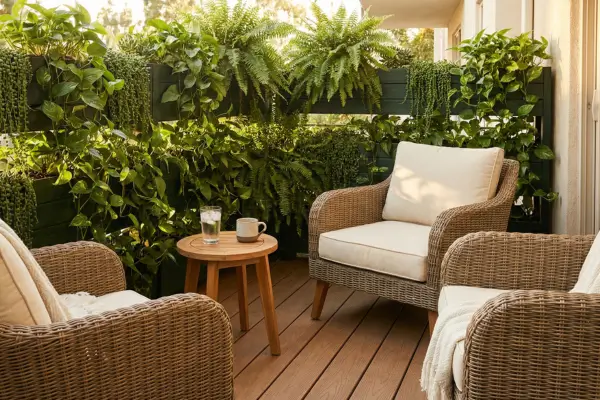
These materials offer a relaxed, tropical feel that works particularly well with lush, dense vertical gardens packed with trailing plants like pothos, ferns, or string of pearls. The textured weave of synthetic wicker creates a visual conversation with the textures of the plants themselves.
A few things to keep in mind:
- Look for furniture with a powder-coated aluminum frame beneath the weave, since it will resist rust far better than steel frames.
- Check that the weave is tight and even, as loose weaving can trap moisture and degrade faster.
- Avoid placing all-weather wicker directly against a constantly dripping plant wall, since prolonged moisture contact shortens its lifespan.
When chosen carefully, synthetic wicker can be one of the most visually rewarding options for outdoor furniture for a balcony vertical garden. It brings warmth and texture to the space while holding its own against the kind of moisture that comes with keeping plants nearby.
Color Coordination Between Furniture and Your Plant Wall
Color is one of the most enjoyable parts of this process, but it is also where people tend to second-guess themselves. The good news is that working with a green backdrop actually gives you a lot of freedom. Green is neutral in the plant world. It goes with almost everything.
That said, there is a difference between colors that simply do not clash and colors that actively enhance each other. When you are thoughtful about your palette, the whole balcony feels designed rather than assembled.
Working With Neutral Tones
Whites, creams, and light grays create a fresh, clean contrast against rich greenery. This is the look you see a lot in Mediterranean-inspired balcony design, where whitewashed furniture sits against walls dripping with climbing plants. It works because the contrast is high but not jarring.
If you go this route, consider mixing in one warm accent, like a terracotta pot or a cushion in a soft rust tone. It prevents the space from feeling sterile and ties the furniture to the earthy tones of the soil and wood in your planter panels.
Earthy and Warm Palettes
Warm browns, honey-toned woods, muted yellows, and burnt oranges feel very much at home alongside greenery. These tones mimic the natural world, so they create a sense of harmony without much effort.
This palette works especially well if you are growing a modular vertical garden for gourmet balconies with herbs like rosemary, thyme, basil, and mint. The look becomes something between a kitchen garden and an outdoor living space, which is a genuinely lovely way to spend a weekend morning with your coffee.
Dark and Moody Contrasts
Do not count out charcoal, navy, or deep black. These darker tones create a dramatic backdrop that makes green pop vividly. It is a more design-forward choice, but when done well, it can make a small balcony feel like a deliberate, curated space.
Dark furniture also tends to show less dirt and weathering, which is a practical perk if you are not someone who loves scrubbing outdoor pieces regularly.
Layout Principles for Furniture Around a Vertical Garden
Getting the layout right is about respecting both the furniture and the plants. When it comes to outdoor furniture for a balcony vertical garden, they both need something from the space, and your job is to make sure neither one suffers.
The most common mistake is pushing all the furniture against the walls, which feels instinctive in a small space but often creates a cramped, waiting-room feel.
Instead, think about pulling at least one piece, a chair or a small bench, slightly away from the wall. It gives the space depth and makes the vertical garden feel more like a feature wall than a crowded backdrop.
Creating Zones on a Small Balcony
Even on a compact balcony, you can create a sense of distinct areas. A small bistro table and chairs in one corner serves as a dining or coffee zone, while a single lounger or hammock chair near the opposite wall becomes a reading nook. The vertical garden anchors one whole side, giving the eye somewhere to land and linger.
Rugs are underrated in this context. An outdoor-safe rug can visually define a seating zone without adding physical bulk, and it immediately makes the space feel finished and intentional.
Leaving Room for the Plants to Thrive
Your plants need access to light and air circulation. When you arrange furniture, make sure you are not blocking natural light from reaching lower sections of your vertical planter wall. Overhanging chair backs or a table shoved too close to the garden can cast shadows that slowly weaken plants over time.
Also think about access. You will need to water, prune, and occasionally replace plants in your vertical garden setup. If your furniture arrangement makes it awkward to reach the planters, you will either skip maintenance or constantly have to rearrange pieces. Neither is ideal.
Practical Features That Make Balcony Furniture Work Harder
When you are working with limited square footage, the furniture you choose needs to earn its place. Purely decorative pieces are a luxury in small outdoor spaces. Functional design, on the other hand, is a gift.
Storage ottomans, for instance, can hold garden tools, extra cushions, or even a bag of soil, while also serving as extra seating or a footrest. Folding tables let you extend your surface space when you need it and tuck things away when you do not.
Furniture With Storage and Multi-Use Design
Look for pieces specifically designed for small outdoor spaces. Nesting tables are a great example. You get two or three tables for the footprint of one, and you can separate them when guests visit or when you need extra surface space for potted herbs.
Bench seating with built-in storage compartments is another winner. The bench itself takes up no more room than a standard chair arrangement, but the hidden storage underneath is useful for anyone who grows their own food and needs somewhere to keep tools within easy reach.
Weather-Resistant Cushions and Textiles
Cushions matter more than people realize. They are often the first thing to deteriorate on an outdoor furniture set, and replacing them can cost nearly as much as the original purchase. Spend a bit more upfront on cushions made with Sunbrella fabric or similar solution-dyed acrylic materials.
These fabrics resist mold, mildew, fading, and water absorption. On a balcony with a living wall nearby, that mold resistance is especially important. Plant moisture can find its way into standard outdoor cushions surprisingly fast, and once mold takes hold, there is not much you can do except replace them.
Budget-Friendly Approaches That Still Look Great
Not everyone has the budget for teak furniture and designer planters, and that is completely fine. Some of the best-looking balcony setups online were built on modest budgets with a clear sense of style and a few smart choices.
The trick is to focus your spending on one or two hero pieces and fill in the rest affordably. A beautiful rattan armchair paired with simple folding tables from a big-box store looks cohesive and intentional if the color palette is consistent.
Secondhand furniture is worth considering too. Outdoor furniture is often sold at a steep discount on Facebook Marketplace or Craigslist when people move or renovate. Teak and aluminum pieces in particular hold up so well that a used set can last another decade with minimal attention.
Another approach is to invest in the cushions and textiles rather than the furniture frames. A simple, inexpensive aluminum frame looks considerably more polished when dressed with high-quality cushion covers in a coordinated color. It is a small financial shift that makes a disproportionate visual difference.
FAQ
You are not alone if you still have a few questions after reading through all of this. Balcony design involves a lot of personal variables, and what works perfectly for one space might need tweaking for another. Below are some of the most common questions people ask when choosing outdoor furniture for a balcony vertical garden.
What type of outdoor furniture works best on a small balcony with a vertical garden?
For small balconies, folding or stackable furniture tends to work best because it can be moved or stored as needed. Bistro sets, slim-profile armchairs, and nesting side tables all offer flexibility without crowding the space. The key is choosing pieces that do not visually compete with the vertical garden, so lighter frames and neutral or earthy tones are a good starting point.
How do I protect outdoor furniture from water dripping off a vertical planter wall?
Position furniture at least 12 to 18 inches away from the face of the planter panels to avoid direct drip exposure. Use furniture made from moisture-resistant materials like teak, aluminum, or quality synthetic wicker. Elevating furniture on rubber feet or outdoor furniture pads also helps prevent moisture from wicking up through contact with a wet floor.
Can I use indoor furniture on a covered balcony that has a vertical garden?
Technically yes, but it is not a great long-term decision. Even covered balconies experience humidity, wind-carried moisture, and temperature swings that accelerate the wear of indoor furniture. If you love a particular indoor piece, look for an outdoor version of it. Many furniture brands now offer near-identical pieces in weatherproof materials.
What color furniture goes best with a green plant wall?
There is no single answer, but white, charcoal, natural wood tones, and terracotta all work well against green. The choice depends on the overall vibe you are going for. White creates a crisp contrast, wood tones create warmth and harmony, and dark tones make the greenery pop dramatically.
How much space should I leave between furniture and my vertical garden panels?
A minimum of 12 inches is recommended for airflow and plant health. For maintenance access, aim for 18 to 24 inches in front of the panels if possible. This gives you room to water, prune, and replace plants without constantly moving furniture around.
Is a modular vertical garden a good fit for a small balcony?
Absolutely. Modular vertical gardens are actually designed with limited spaces in mind. They go up instead of out, which means they claim wall space rather than floor space. A modular vertical garden for gourmet balconies can hold a surprising number of herbs, small vegetables, or decorative plants without eating into your seating or dining area at all.
What outdoor furniture materials last the longest on a balcony?
Teak, powder-coated aluminum, and high-density polyethylene are generally considered the most durable options for outdoor use. Teak is naturally resistant to moisture and insects. Aluminum does not rust. High-density polyethylene, used in many modern Adirondack-style chairs, resists fading, cracking, and moisture with almost zero maintenance required.
Wrapping It All Up: Your Balcony, Your Green Space
Choosing outdoor furniture for a balcony with a vertical garden is really about seeing the two elements as partners rather than competitors. The garden brings life, color, and texture. The furniture brings comfort, function, and a reason to actually spend time out there. When they work together, the result is one of the most rewarding spaces in any home.
Take your time with the process. Measure before you buy, think about how you actually use the space, and do not be afraid to mix and match styles as long as the colors and scale feel cohesive. The most beautiful balconies are often the ones that look slightly eclectic but clearly thought-through, as if they grew naturally over time.
Your balcony is not a showroom. It is a living space that should invite you to sit down with a book or have your morning coffee surrounded by your herbs. If your furniture and your garden both contribute to that feeling, you have done something right. Browse other articles on the blog for more ideas, and if you have a setup you are proud of, share it in the comments below.