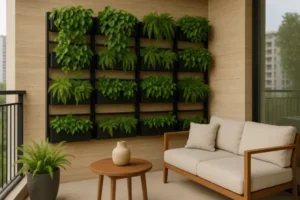
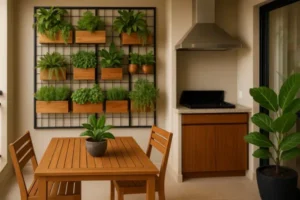
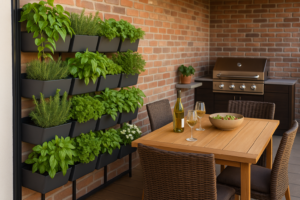
Vertical garden design with outdoor rugs is one of the most effective ways to transform a balcony into a complete, comfortable, and visually integrated space. When plants, textures, and decor harmonize, the balcony ceases to look like an improvised space and becomes part of the home.
Many people invest in a vertical garden but neglect the influence of the flooring and surrounding decor on the final result. Outdoor rugs, furniture finishes, and small details play a fundamental role in the feeling of coziness and balance in the space on a daily basis.
Now, you will learn how to combine vertical gardens, outdoor rugs, and balcony decor in a practical and natural way. The goal is to help you create a space with an intentional, comfortable look that reflects your personal style, without unnecessary complications.
Vertical Garden Design with Outdoor Rugs as the Foundation of Balcony Style
Vertical Garden Design with Outdoor Rugs should always be treated as a single design decision rather than two separate choices. When these elements are planned together, the balcony gains visual consistency, and the space feels deliberate instead of improvised.
The vertical garden draws attention upward, while the rug grounds the space and creates a sense of comfort.
A vertical garden naturally adds texture, color variation, and visual movement to the wall. Leaves soften rigid architectural lines and bring life to otherwise neutral surfaces. The outdoor rug complements this by warming up the floor and visually connecting the greenery to the seating or dining area.

Beyond appearance, this pairing also influences how the balcony is used. When the floor feels inviting and the wall feels alive, people are more likely to spend time there. This combination transforms the balcony from a decorative corner into a functional outdoor room designed for everyday moments.
Understanding the Visual Relationship Between Greenery and Textiles
Plants and textiles share more design characteristics than most people realize, which is why vertical garden design with outdoor rugs works so well in balcony spaces.
Both elements introduce softness, texture, and visual rhythm, especially important in environments dominated by hard materials like tile, metal, or concrete. When greenery and fabrics are visually aligned, the space feels balanced, comfortable, and inviting.
A vertical garden with large leaves pairs best with rugs that feature subtle textures or wider patterns, while finer foliage tends to work better with tighter weaves and simpler designs. This thoughtful pairing helps prevent visual overload and allows each element to enhance the other without competing for attention.
It is also helpful to think of the rug as a visual extension of the garden itself. Instead of acting as a focal point, it should support the greenery by repeating natural tones or organic textures. This approach reinforces harmony across the space and keeps the overall design calm and cohesive.
Choosing the Right Color Palette for Balcony Harmony
Color choices play a major role in how well vertical garden design with outdoor rugs comes together in a balanced and visually pleasing way. Green will naturally dominate the space, but it appears in many shades, from deep forest tones to lighter, more vibrant hues.
Choosing complementary colors helps shape the overall mood of the balcony and keeps the design visually calm.
Earth-inspired colors such as beige, taupe, warm gray, and muted terracotta tend to work especially well. These tones provide a relaxed background that allows plants to stand out naturally without overwhelming the senses. Cooler neutrals like soft charcoal or faded blue can also work when used sparingly and thoughtfully.
A cohesive palette also helps visually connect different functional zones within the balcony. When the rug color relates to planter finishes or furniture tones, the space feels unified instead of segmented. This subtle coordination often makes small balconies appear more spacious and intentionally designed.
How Texture Balances Vertical and Horizontal Elements
Texture is what prevents a balcony from feeling flat or lifeless. Vertical gardens bring natural depth to walls, while outdoor rugs introduce tactile interest underfoot. When these textures complement each other, the space feels layered and complete.
Smooth rugs placed next to dense foliage can feel disconnected, while overly thick rugs may dominate limited floor space. Woven outdoor rugs with visible texture usually provide the best balance, offering interest without adding unnecessary bulk.
Consistency across surfaces is equally important. If your planters have a matte finish, a rug with a subtle woven texture reinforces that look. Mixing too many contrasting finishes can create visual confusion, especially in compact balconies.
Sizing Outdoor Rugs to Match Balcony Proportions
Rug size is one of the most common design challenges in balconies, especially when working with vertical garden design with outdoor rugs in compact spaces.
A rug that is too small can make the area feel fragmented, while one that is too large may visually overwhelm narrow layouts. Choosing the correct size helps clearly define how the balcony is meant to be used.
Ideally, the rug should frame the main activity zone, whether it is seating, dining, or cooking. It should sit comfortably beneath furniture without touching walls or blocking circulation paths. This careful placement creates a visual anchor that organizes the space and improves flow.
The vertical garden can also guide rug positioning. Aligning the rug parallel to the garden wall reinforces structure and strengthens the connection between vertical and horizontal elements. This relationship enhances balance and gives the balcony a more intentional and cohesive layout.
Integrating Modular Vertical Garden Systems with Balcony Decor
A modular vertical garden for gourmet balconies offers both structure and flexibility. These systems allow plants to be arranged in clean, organized layouts that suit modern balcony designs. Their orderly appearance pairs naturally with streamlined rugs and minimalist furniture.
Modular systems are especially useful in urban balconies where space efficiency matters. They provide greenery without clutter and make plant care more manageable. When paired with rugs featuring subtle linear or geometric patterns, the design feels cohesive rather than rigid.
This integration also simplifies future updates. Modular gardens allow easy plant changes, while neutral rugs adapt to different decor styles. Together, they support long-term flexibility without requiring full redesigns.
Furniture Placement That Connects Rugs and Green Walls
Furniture acts as the link between the vertical garden and the outdoor rug. Placement should enhance flow and maintain clear sightlines rather than blocking the garden or awkwardly cutting across the rug.
Low-profile furniture works particularly well in balconies with vertical gardens. It keeps visual focus on the greenery while maintaining a sense of openness. Chairs and tables should sit comfortably within the rug’s boundaries to reinforce cohesion.
Material choice also matters. Wood, metal, and woven finishes interact differently with plants and textiles. Repeating materials across furniture, planters, and accessories helps unify the entire space visually.
Lighting Choices That Enhance Garden and Rug Together
Lighting plays a subtle yet essential role in tying the balcony together. Soft lighting highlights plant textures and rug patterns without creating harsh contrasts that flatten the space.
Warm-toned lighting generally complements greenery and makes outdoor rugs feel cozier. Wall-mounted lights can softly illuminate the vertical garden, while low-level lighting helps define the rug area during evening hours.
Balanced lighting ensures that neither the garden nor the rug dominates after sunset. Instead, both elements remain visible and inviting, extending the usability of the balcony into the night.
In addition, thoughtful light placement helps guide how the space is experienced. When light gently transitions from the vertical surface down to the floor, it creates a visual flow that feels natural and calming.
This layered approach makes the balcony feel more intentional and comfortable, especially during quiet evenings when lighting becomes a key design element rather than just a functional one.
Decor Accessories That Support the Main Design Elements
Accessories should always reinforce the primary design elements rather than compete with them, especially when working with vertical garden design with outdoor rugs.
Cushions, side tables, planters, and decorative objects work best when they repeat colors or textures already present in the garden and rug, helping the space feel visually connected.
A limited number of well-chosen accessories adds personality without creating clutter. Each item should feel intentional and serve a clear visual or functional purpose, contributing to comfort rather than distraction.
Consistency remains essential. When accessories echo the tones of the rug and the organic feel of the plants, the balcony feels curated and relaxed instead of visually busy or overstimulating.
It also helps to think of accessories as connectors between surfaces. A cushion that mirrors leaf tones or a planter that complements the rug texture creates subtle links throughout the space. These small visual connections strengthen cohesion while keeping attention focused on the garden as the central feature.
Seasonal Adjustments Without Redesigning the Whole Balcony
One of the advantages of combining vertical gardens with outdoor rugs is adaptability. Small seasonal changes can refresh the space without altering the core design.
Swapping cushion covers, introducing lighter textiles, or adjusting accessories can subtly shift the mood. The vertical garden remains the anchor, while textiles allow for visual variation throughout the year.
This approach keeps the balcony feeling current and personal without constant redesign. The foundation stays strong, and the details evolve naturally.
Seasonal updates also help the space feel more connected to daily life. Simple changes such as adding warmer textures during cooler months or lighter fabrics during warmer periods maintain comfort without disrupting the overall balance. This flexibility is especially valuable in balconies used year-round.
Common Design Mistakes to Avoid
A frequent mistake is treating the vertical garden as an afterthought rather than a central design feature. When it lacks integration with rugs and decor, the space can feel unbalanced.
Another issue is using rugs intended for indoor use. These often wear quickly outdoors, affecting both appearance and comfort. Choosing outdoor-specific materials helps preserve the overall look.
Overcrowding is also common. Too many plants, patterns, or accessories can overwhelm small balconies. Simplicity usually results in a more refined and enjoyable space.
Another overlooked mistake is ignoring scale. Oversized decor or furniture can visually overpower both the rug and the garden, breaking harmony. Paying attention to proportion ensures that every element feels like it belongs, supporting the space rather than competing within it.
Design Ideas for Different Balcony Styles
Different lifestyles require different design priorities. A gourmet balcony benefits from durable rugs that handle frequent use, while plants are chosen for easy care and visual structure.
Relaxation-focused balconies may prioritize softness, layered textiles, and lush greenery. Thicker rugs and comfortable seating enhance the sense of retreat.
Minimalist balconies thrive on restraint. Structured gardens, neutral rugs, and limited accessories create a calm, organized atmosphere that feels timeless.
Regardless of style, clarity of purpose matters most. When the design reflects how the balcony is actually used, choices become more intuitive. This alignment between function and style results in spaces that feel effortless rather than overly designed.
Practical Maintenance Tips for Long-Lasting Results
Maintenance is essential for keeping the balcony looking fresh over time. Outdoor rugs should be easy to clean and quick to dry, preventing wear and discoloration.
Vertical gardens require consistent watering and occasional trimming. Modular systems simplify upkeep and help maintain plant health without excessive effort.
With light, regular care, both elements remain visually appealing. A well-maintained balcony always feels more welcoming and enjoyable.
Creating a simple maintenance routine makes care manageable. Setting aside a few minutes each week to check plants and clean surfaces prevents small issues from becoming visible problems. This consistency preserves both comfort and appearance with minimal effort.
FAQ About Vertical Garden and Outdoor Rug Design
Choosing the right combination of plants, rugs, and decor often raises practical questions. Below are clear answers to common doubts that help simplify decisions and make balcony design choices feel more confident and natural.
How do I choose a rug color that works with green plants
Neutral tones such as beige, soft gray, warm taupe, and light brown tend to work well with most shades of green. These colors create a calm base that allows plants to stand out naturally without competing for attention.
Choosing a rug with subtle color variation or natural-looking fibers can also add depth while keeping the overall look balanced.
Can I use patterned rugs with a vertical Garden.
Yes, patterned rugs can work well when chosen carefully. The key is to keep patterns simple and low-contrast so they support the greenery rather than distract from it. Linear designs, soft geometric shapes, or understated textures usually complement vertical gardens without overwhelming the space visually.
What rug materials are best for balconies
Rugs designed specifically for outdoor use are the best option for balconies. Materials such as polypropylene are durable, easy to clean, and maintain their appearance over time.
These rugs handle changes in temperature and moisture better than indoor rugs, making them more reliable for everyday use in outdoor spaces.
How close should the rug be to the vertical garden wall
The rug should visually align with the vertical garden wall but should not touch it directly. Leaving a small gap helps maintain visual balance and prevents the space from feeling crowded. This spacing also allows for easier cleaning and keeps the rug from interfering with planters or irrigation systems.
Is a modular vertical garden suitable for small balconies
Yes, modular vertical garden systems are especially well suited for small balconies. Their structured design allows plants to be arranged efficiently without taking up floor space.
When paired with streamlined furniture and a properly sized outdoor rug, modular systems help create a clean, organized look even in compact areas.
Conclusion
Matching a vertical garden with outdoor rugs and balcony decor is less about rules and more about thoughtful coordination. When colors, textures, and proportions work together, the space feels natural and inviting rather than staged.
By treating greenery and textiles as partners, you create a balcony that supports daily use and quiet enjoyment. Small choices, like rug texture or furniture placement, make a noticeable difference over time.
The most successful balconies reflect how people actually live. When your vertical garden, rug, and decor align, the result is a space that feels comfortable, balanced, and genuinely yours.