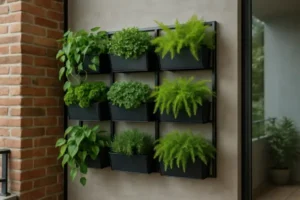
A vertical garden next to grill setups can look amazing on a gourmet balcony, but they need a little planning to stay healthy. Heat, smoke, and grease are the three things that quietly wear plants down, and most people only notice once the leaves start turning brown.
The good news is that you don’t have to choose between grilling and growing. With the right distance, smart plant choices, and a few simple barriers, your living wall and your grill can share the same space without any drama.
In this guide, I’ll walk you through everything I’ve learned about keeping plants happy beside a cooking area. You’ll find practical layout tips, plant suggestions, material advice, and an easy cleaning routine you can follow after every cookout.
Why a Vertical Garden Next to Grill Needs Special Planning
Most vertical garden advice assumes a calm environment with steady light and fresh air. A gourmet balcony is different. When you fire up the grill, the temperature in that corner can climb fast, and the air fills with smoke and tiny drops of fat that settle on every surface nearby, including your plants.
Think about how your kitchen cabinets above the stove get sticky over time. Your plants go through the same thing, only they can’t be wiped down with a sponge as easily. Leaves covered in a greasy film struggle to breathe and absorb light, and that slowly weakens the whole plant. A little planning up front saves you from replacing half your garden every summer.
Heat Is the First Challenge
Grills release radiant heat, which travels in a straight line and warms whatever it hits. Plants within that line can get scorched, even if the air around them doesn’t feel very hot to you. Leaves closest to the grill usually show the damage first, with crispy edges and faded color.
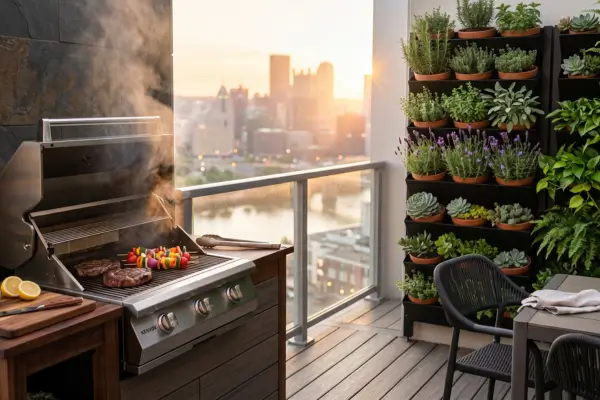
Heat also rises. That means anything mounted directly above the grill takes the worst of it. If your balcony layout places a planter panel right over the cooking area, that’s the first thing I’d change.
Smoke and Grease Build Up Over Time
Smoke carries fine particles that land on leaves and block sunlight. One cookout won’t hurt much, but a whole season of weekend barbecues adds up. Grease is even trickier because it sticks, attracts dust, and can clog the tiny pores plants use to exchange air.
My neighbor in Chicago learned this the hard way. She had a gorgeous wall of pothos right beside her gas grill, and by August the leaves nearest the burners looked dull and coated. Once she moved those modules a few feet away and started rinsing the leaves weekly, the plants bounced back within a month.
Fire Safety Matters Too
Dry leaves, dried moss, and some fiber based planters can catch a spark more easily than you might think. Keeping foliage healthy and hydrated is part of plant care, but it’s also part of keeping your balcony safe. A well watered garden is simply less likely to cause trouble.
How Far Should Your Plants Be From the Grill?
This is the question I hear most, and the honest answer depends on your grill type and your balcony size. As a general rule, keep plants at least three feet to the side of the grill and never mount anything directly above it. If you have more room, five feet or more is even better for delicate plants.
Before anything else, check the rules in your building. Many apartment buildings and HOAs in the United States have strict guidelines about grilling on balconies, and local fire codes often limit charcoal and propane grills in multifamily buildings. Electric grills are usually the most accepted option. Your grill’s manual will also list the recommended clearance from walls and other combustible materials, so give it a quick read.
Side Placement Works Better Than Overhead
The safest layout puts your grill on one side of the balcony and your living wall on the opposite side or on an adjacent wall. That way, heat and smoke rise and drift away instead of rolling straight into the foliage. If your balcony is narrow, place the garden on the wall farthest from the grill.
Pay Attention to Wind Direction
Have you ever noticed which way the smoke usually drifts when you cook? That simple observation tells you a lot. If the breeze on your balcony tends to push smoke toward one wall, that’s the wrong spot for your plants. Put the garden upwind of the grill whenever you can.
A Simple Distance Guide
Here’s a quick reference based on what I’ve seen work on real balconies:
- Electric grills: at least three feet from the nearest plants, since they produce less smoke and no open flame
- Gas grills: four to five feet, with nothing mounted above the lid
- Pellet and charcoal grills: five feet or more, and only if your building actually allows them
Choosing the Right Grill for a Balcony With a Living Wall
If you’re still deciding what kind of grill to buy, your plants should be part of that decision. Some grills produce far more smoke and heat than others, and on a small balcony that difference shows up quickly on your greenery.
Electric grills are the friendliest option for a modular vertical garden for gourmet balconies. They heat up evenly, produce very little smoke, and have no open flame. Many modern electric models also come with lids that hold heat inside, which keeps the surrounding air cooler. For renters and condo owners, they’re often the only grill allowed anyway.
Electric Grills
These are my top pick for anyone who loves both cooking and plants. They’re compact, easy to clean, and the drip trays catch most of the grease before it becomes airborne. You still get those nice grill marks on a steak or a zucchini without filling your balcony with smoke.
Gas Grills
Gas grills are popular and practical, but they run hotter and create more grease smoke, especially when fat drips onto the burners. If you already own one, keep the lid closed as much as possible while cooking and clean the grease trap often. That alone cuts down a lot of the residue that ends up on your leaves.
Charcoal and Pellet Grills
These deliver incredible flavor, but they’re the toughest match for a balcony garden. They produce heavy smoke, loose ash, and occasional sparks. Many buildings ban them on balconies for good reason. If yours allows them, give your plants as much space as you possibly can.
Plants That Handle Heat and Smoke Near the Grill
Not every plant can live happily beside a cooking area. Some species have tough, waxy, or aromatic leaves that shrug off heat and smoke, while others wilt at the first sign of a warm breeze. Choosing the right plants for the modules closest to the grill makes a huge difference.
A smart approach is to create zones. The modules nearest the grill get the toughest plants, and the more delicate ones go farther away. This way, your garden still looks lush and varied, but the hardy plants act like a buffer for everything behind them.
Hardy Herbs for the Grill Zone
Mediterranean herbs are the natural choice here. They come from hot, dry, sunny places, so a little warmth doesn’t bother them. They also happen to taste amazing on grilled food, which is a nice bonus.
- Rosemary: tough woody stems and needle-like leaves that handle heat very well
- Thyme: compact, low growing, and very forgiving
- Oregano: spreads nicely and recovers fast if a few leaves get singed
- Sage: thick, fuzzy leaves that hold moisture and resist drying out
- Lavender: loves sun and warmth, and it smells lovely on summer evenings
Picture this: you’re flipping chicken skewers and reach over to snip fresh rosemary from the wall without leaving the grill. That’s the kind of practical beauty a well planned gourmet balcony can offer.
Succulent7s and Tough Foliage Plants
Succulents like sedum and echeveria store water in their thick leaves, so they handle heat better than most plants. They also have smooth surfaces that are easier to rinse when grease lands on them. For a leafy look, plants like snake plant and ZZ plant tolerate warmth and are very low maintenance.
Plants to Keep Farther Away
Some favorites simply don’t belong near the grill. Ferns, calatheas, and fittonias have thin, delicate leaves that scorch easily. Ornamental grasses and dried decorative moss can dry out and catch sparks. Keep these in the far modules or on another wall altogether.
Protective Barriers and Smart Layout Ideas
Even with the right distance and the right plants, a little extra protection goes a long way. A barrier between the grill and the garden blocks radiant heat, keeps grease from reaching the leaves, and helps define the cooking area as its own space on the balcony.
The best part is that barriers can look great. With the right material, a heat shield doesn’t have to feel like a safety device. It can become part of your balcony design, adding texture and a clear separation between cooking and relaxing.
Heat Resistant Panels
A panel made from stone, ceramic tile, or stainless steel placed between the grill and the garden works wonders. These materials absorb and deflect heat instead of passing it along. A single tall tile panel can protect an entire section of your living wall.
Tempered Glass Screens
If you want protection without blocking the view of your plants, tempered glass is a great option. It stops grease splatter and deflects a good amount of heat while keeping the balcony feeling open and bright. Just be sure to wipe it down regularly, since smoke leaves a film on glass too.
Create a Cooking Zone and a Green Zone
One layout trick I love is dividing the balcony into two clear areas. The cooking zone holds the grill, a prep counter, and maybe a small shelf for tools. The green zone holds the living wall, seating, and the dining table. When each area has its own purpose, protecting the plants happens naturally.
Use a Prep Counter as a Buffer
A small outdoor counter or bar cart placed between the grill and the garden does double duty. It gives you space to prep food and adds physical distance between the heat and your plants. It’s one of the easiest upgrades you can make.
Materials for Your Modular Vertical Garden That Stand Up to Heat
The planters and frame you choose matter just as much as the plants themselves. Some materials warp, fade, or even melt when exposed to regular heat, while others handle warm conditions for years without complaint.
When you’re setting up a modular vertical garden for gourmet balconies with a grill nearby, go for durability first and looks second. Fortunately, many heat resistant materials are also beautiful, so you won’t need to compromise much.
Best Materials Near a Grill
- Powder coated metal: strong, heat resistant, and easy to wipe clean
- Ceramic and terracotta modules: handle heat well and look warm and natural
- Treated hardwood frames: attractive and sturdy when kept away from direct heat
- Stone or concrete planters: heavy but extremely durable in hot corners
Materials to Avoid Close to the Heat
Thin plastic pockets can warp and crack after repeated exposure to heat. Felt pocket systems are popular, but they dry out quickly and can become a fire hazard when dry. Coconut fiber liners have the same issue. If you love these materials, simply keep them in the modules farthest from the grill.
Choose Darker or Easy Clean Finishes
Light colored planters show smoke stains quickly. A darker finish, or a smooth glazed surface, hides residue better and wipes clean in seconds. It’s a small detail, but it keeps your balcony looking fresh all season long.
Cleaning and Care Routine After Every Cookout
A quick routine after grilling keeps your garden looking healthy and prevents grease from building up. It doesn’t take long, maybe ten minutes, and you can do it while the grill cools down.
Consistency is the secret here. A light rinse every weekend is much easier than scrubbing sticky leaves once a month. Your plants will thank you with brighter color and steadier growth, and you’ll notice fewer pests too, since grease residue tends to attract insects.
Step by Step Care After Grilling
Let Everything Cool First
Never spray water near a hot grill. Wait until the grill and the surrounding area have cooled down before starting any cleaning.
Rinse the Leaves Gently
Use a spray bottle or a gentle mist setting on a hose attachment to rinse the leaves closest to the grill. For heavier residue, mix a few drops of mild dish soap into a spray bottle of water, mist the leaves, and rinse with plain water afterward.
Wipe Hard Surfaces
Clean the heat shield, glass screen, and planter surfaces with a damp cloth. Grease wipes off easily when it’s fresh and becomes stubborn when it sits for days.
Check Soil Moisture
Heat dries out soil faster than you’d expect. Push a finger into the soil of the modules nearest the grill. If the top inch feels dry, give them a drink. Well hydrated plants resist heat stress far better.
Weekly and Seasonal Checks
Once a week, look for crispy edges, faded leaves, or signs of pests. Trim damaged foliage so the plant can focus its energy on new growth. At the start and end of grilling season, check the frame and mounting hardware for any heat related wear.
Common Mistakes to Avoid
After years of watching people set up balcony gardens, I’ve noticed the same mistakes showing up again and again. Most of them are easy to fix once you know what to look for.
The biggest one is placing plants for looks without thinking about function. A living wall right behind the grill might look beautiful in photos, but it rarely survives a full summer of cookouts. A little planning keeps both your plants and your balcony in great shape.
- Mounting planters directly above the grill: heat and smoke rise straight into them
- Using dry decor near the flame: preserved moss and dried flowers are a fire risk
- Skipping the rules: ignoring building or HOA grill policies can lead to fines
- Forgetting to water after cooking: heat dries soil fast, especially in small modules
- Letting grease sit for weeks: buildup becomes harder to remove and weakens plants
- Leaving the grill uncovered: a cover keeps ash and grease from spreading on windy days
One more tip that many people overlook: keep a small fire extinguisher rated for grease fires within reach on your balcony. You’ll probably never need it, but it gives you peace of mind every time you cook.
Frequently Asked Questions
Many readers come to this topic with very specific questions about combining plants and grilling in a small outdoor space. Here are the answers to the ones people search for most often on Google.
Can you put a vertical garden next to a grill?
Yes, as long as you plan the layout carefully. Keep the plants at least three feet to the side, never above the grill, and choose heat tolerant species for the modules closest to the cooking area. A heat shield between the two makes the setup even safer.
How far should plants be from a grill?
A minimum of three feet works for electric grills, while gas grills usually need four to five feet. Charcoal and pellet grills need even more space. Always check your grill’s manual and your building’s rules for exact clearance requirements.
Does grill smoke kill plants?
Occasional smoke won’t kill most plants, but repeated exposure can weaken them. Smoke and grease coat the leaves, block light, and make it harder for plants to breathe. Regular rinsing and good placement prevent most of the damage.
What plants can handle heat from a grill?
Rosemary, thyme, oregano, sage, lavender, and succulents like sedum are great choices. They handle warm, dry conditions well and recover quickly from minor stress. Snake plant and ZZ plant are good leafy options.
Are grills allowed on apartment balconies?
It depends on your city and building. Many fire codes restrict charcoal and propane grills on balconies of multifamily buildings, while electric grills are usually permitted. Check with your property manager or HOA before buying one.
How do I clean grease off plant leaves?
Mix a few drops of mild dish soap in a spray bottle of water, mist the leaves gently, and rinse with clean water. For sturdy leaves, you can also wipe them with a soft damp cloth. Avoid harsh cleaners, which can damage the leaf surface.
Is a felt pocket vertical garden safe near a grill?
Felt pockets can dry out and become flammable, so it’s best to keep them away from the heat. If you already have a felt system, place it on the far side of the balcony and use metal or ceramic modules closer to the grill.
Final Thoughts
Grilling and gardening can live side by side on a gourmet balcony with just a bit of thoughtful planning. Distance, plant choice, and simple barriers do most of the work, and a quick cleaning routine takes care of the rest.
Start with the easy changes. Move any planters away from the space above the grill, place your toughest herbs in the nearest modules, and give the leaves a gentle rinse after each cookout. You’ll see the difference within a few weeks.
Your balcony should be a place where good food and green life come together naturally. With these tips, your plants can stay lush all season while you enjoy every burger, skewer, and grilled veggie under the open sky.
Do you grill next to your plants already? Tell us how you set up your space in the comments below, and check out our other articles on modular vertical gardens for more ideas to make your gourmet balcony shine.