Privacy screens vertical gardens urban balcony design is one of those combinations that sounds complicated at first but turns out to be one of the smartest ways to make a small outdoor space feel like your own private retreat.
If you live in an apartment building where your neighbor can practically see what you are having for dinner, you already know why this topic matters so much right now.
Balconies have become one of the most valued parts of city living. A well planned balcony can double as a reading nook, a dining spot, or a quiet corner to drink your coffee before the day gets loud.
In this article, Marcos walks you through the practical choices that actually work, the mistakes people make with screens and plants, and how to combine both elements so your balcony feels private, green, and genuinely welcoming.
Why Privacy Screens Vertical Gardens Urban Balcony Design Go Hand in Hand
When people search for privacy screens vertical gardens urban balcony design, they are usually dealing with the same two frustrations at once. First, they feel exposed to neighbors or street noise. Second, they want more greenery but do not have the floor space for pots and planters. The good news is that these two problems often share a single solution.
A vertical garden mounted against a railing or wall can act as a living privacy screen while also giving you fresh herbs, flowers, or even small vegetables within arm’s reach. Think of a couple who turned a bare, exposed balcony into a shaded green corner just by installing a simple modular planting wall along the railing.
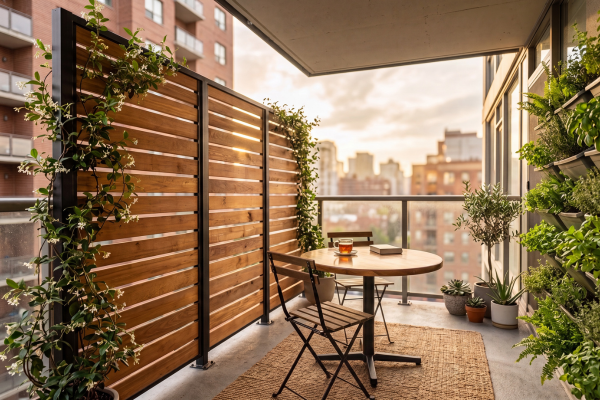
Within a few months, that wall was doing double duty: blocking the view from the building across the street and producing basil, mint, and cherry tomatoes.
This is not a coincidence. Vertical structures naturally lend themselves to layering, and layering is exactly what creates privacy. Instead of a flat screen that just blocks a view, a living wall adds texture, movement, and a sense of depth that makes the balcony feel bigger rather than boxed in.
Choosing the Right Balcony Privacy Solution for Your Space
Not every balcony is the same size or facing the same direction, so the privacy solution that works for a tenth floor unit with strong winds is not going to be the same one that works for a ground floor patio surrounded by hedges.
Before picking materials, it helps to think about three things: how much wind your balcony gets, how many hours of direct sun it receives, and whether your building has restrictions on what can be attached to railings.
Apartment balcony privacy ideas usually fall into a handful of categories, and knowing them ahead of time saves a lot of trial and error.
- Woven bamboo or reed screens, which are affordable and give a natural look
- Retractable outdoor curtains, ideal for balconies that need flexible shade
- Frosted or textured acrylic panels, good for windy high rise units
- Living green walls, which combine privacy with fresh air and color
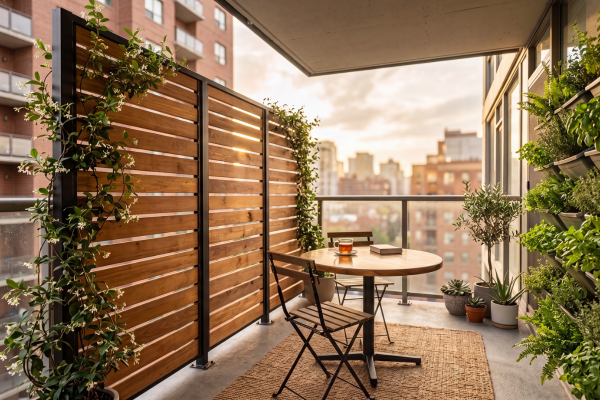
- Lattice panels paired with climbing plants like jasmine or clematis
Each of these options has trade offs in cost, maintenance, and how much sunlight they let through, so it is worth matching the choice to your actual daily routine rather than just picking whatever looks nicest in a photo.
Modular Vertical Garden for Gourmet Balconies: A Growing Trend
The phrase modular vertical garden for gourmet balconies keeps showing up in searches, and there is a clear reason why. More people are treating their balcony as an extension of the kitchen, not just a decorative spot.
A gourmet balcony usually includes a small grill, a compact table, and space to actually cook or entertain, and a modular vertical garden fits naturally into that setup because it keeps fresh herbs and edible plants close to where the cooking happens.
These systems are called modular because they come in individual panels or pockets that you can add, remove, or rearrange depending on the season. In the spring you might fill the panels with lettuce and strawberries, and by fall you swap those out for hardy herbs like rosemary and thyme.
A friend of mine who hosts weekend dinners on her balcony swears that having fresh cilantro and mint within reach changed how often she actually cooks outside instead of ordering delivery.
If you are considering this route, look for modular kits made from UV resistant plastic or powder coated metal, since balconies get more direct exposure to sun and rain than a garden bed protected by a roof overhang. Drainage also matters more here than people expect, because water pooling on a balcony floor can damage flooring or leak into the unit below.
Materials That Hold Up Outdoors
Balcony conditions are tougher than most people assume. Wind, temperature swings, and constant sun exposure wear down cheap materials fast, so it pays to spend a little more upfront on something built for the outdoors.
- Powder coated aluminum frames resist rust and hold up in coastal or humid climates
- Cedar and teak wood age gracefully and naturally resist rot
- Felt or fabric pocket systems are lightweight but need more frequent watering
- Recycled plastic panels are budget friendly and low maintenance
Best Plants for Balcony Privacy Screens That Also Look Good
Picking plants for a living privacy wall is not just about height. You want fullness, quick growth, and something that stays attractive across different seasons rather than looking bare for half the year. This is one of the most searched questions related to privacy screens vertical gardens urban balcony design, and for good reason, since the wrong plant choice can leave you waiting a full year for coverage that never quite fills in.
Fast growing climbers are usually the top recommendation because they cover a trellis or lattice quickly without needing constant replanting. Star jasmine, for example, grows dense enough within one or two seasons to block a clear sightline while also filling the air with a pleasant scent during bloom season. Bamboo in containers is another popular pick, though it needs a deep enough pot and regular pruning to avoid becoming unmanageable.
For balconies with partial shade, ferns and pothos work well in vertical pocket systems, filling gaps with lush green without needing hours of direct light. Sun drenched balconies do better with succulents mixed into a living wall, since they tolerate heat and need far less watering than leafy greens.
Combining Height and Density for Real Privacy
A single row of tall plants rarely blocks a view completely, because gaps between stems still let people see through at certain angles. What actually works is layering: shorter, denser plants near eye level combined with taller climbers above. This creates a solid visual barrier from a seated position, which is where most people actually spend their time on a balcony anyway.
Some reliable combinations include:
- Boxwood or dwarf holly in lower planters paired with clematis climbing above
- Ornamental grasses mixed with morning glory vines
- Herb pockets like rosemary and lavender under a jasmine covered trellis
Vertical Garden Wall Design Ideas for Small Balconies
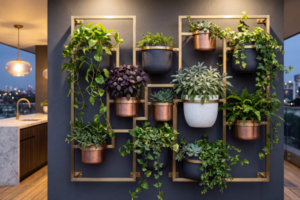
Small balconies present a unique challenge because every inch counts, and this is exactly where vertical garden wall design ideas make the biggest difference. Instead of competing for floor space with furniture, a vertical setup uses the one dimension most balconies have plenty of: height.
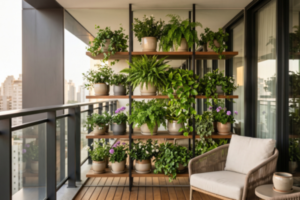
The most common approach is a modular panel system mounted directly onto the railing or an exterior wall, which frees up the entire floor for a chair or small table. Another popular method uses a freestanding ladder shelf stacked with potted plants, giving you the flexibility to move it around or bring it indoors during harsh weather.
Hanging pouches made of breathable fabric are also a favorite among renters, since they do not require drilling and can be removed without leaving marks.
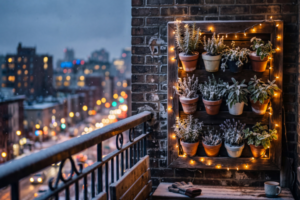
Here is something a lot of people overlook: vertical gardens do not have to be plants only. Mixing in small solar lights, decorative hooks for hanging lanterns, or a narrow shelf for a coffee cup turns the wall into a functional feature rather than just a decoration. Have you ever noticed how the balconies that feel most inviting usually mix greenery with small personal touches rather than plants alone?
Corner balconies and narrow galley style balconies each call for slightly different tricks. On a corner unit, running the vertical garden along the longer wall usually leaves the shorter side open for a chair, which keeps the space from feeling closed in on every side.
Narrow balconies benefit from mounting planters at staggered heights instead of one flat row, since a zigzag pattern draws the eye upward and makes the whole area feel less like a hallway. A neighbor of mine with a balcony barely wide enough for two chairs solved this by hanging three small planters at different heights on one wall, and the staggered look made the space feel noticeably deeper than it actually was.
Color choice plays a bigger role than most people expect too. Darker plant containers tend to recede visually, which helps a small balcony feel larger, while bright colored pots can make a space feel busy if used everywhere at once. Sticking to one or two container colors, then letting the plants themselves provide the color variety, usually creates a calmer and more put together look.
Lighting and Layout Tips
Good lighting changes how a balcony feels after sunset, and it is worth planning this alongside your planting layout rather than as an afterthought.
- String lights woven through a trellis add warmth without taking up space
- Solar stake lights placed among lower plants highlight texture at night
- A single warm toned lantern near the seating area creates a cozy focal point
Balcony Privacy Ideas for Apartments With Strict HOA or Lease Rules
Renters and condo owners often run into the same obstacle: the building rules restrict drilling into railings or walls, which limits how a screen or garden can be installed. This is a real concern, and it shapes a lot of the searches around privacy screens vertical gardens urban balcony design, since people want solutions that look permanent without actually being permanent.
Freestanding options solve most of this problem. A tall planter box on wheels, weighted at the base, can hold a small trellis with climbing plants and be repositioned whenever needed. Clip on privacy screens that attach to railings with adjustable straps are another practical choice, since they can be removed in minutes if a lease ends or an HOA changes its policy.
Command style outdoor hooks, rated for exterior use, also hold surprising weight and work well for hanging lightweight fabric screens or small planters.
Before buying anything, it makes sense to read the lease or HOA guidelines carefully, since some buildings allow greenery but restrict anything that alters the exterior appearance visible from the street. A quick email to building management asking specifically about planters, screens, or hanging systems usually clears up any confusion before money gets spent on something that has to come down a week later.
Renter Friendly Solutions That Still Look Established
Just because something is temporary does not mean it has to look temporary. Grouping several tall planters together creates the same visual density as a built in garden wall, and a freestanding privacy panel placed at an angle can block sightlines just as effectively as one that is bolted in.
A tenant I know once assumed her building would never allow anything on the balcony after a bad experience with a previous landlord, so she went a full year without adding a single plant. When she finally asked, it turned out the only restriction was on drilling into the exterior brick, and everything else, including a weighted planter and a clip on screen, was fine.
That single question saved her from missing out on a green, private balcony for no real reason. It is a small reminder that assumptions about what is allowed are not always accurate, and a short conversation with a property manager often opens up more options than expected.
For anyone renting month to month or planning to move within a year or two, it also helps to think about how easily a setup packs down. Modular panels that snap together without tools, planters with built in wheels, and screens that roll up for storage all make the next move considerably less stressful than hauling a permanent structure apart.
Small Space Gardening Tips for Balcony Owners
Working with limited square footage forces some creative problem solving, but small space gardening tips have improved a lot over the past few years as more manufacturers design specifically for balconies rather than adapting backyard products.
Container size matters more than most beginners realize. A pot that looks fine in the store often turns out too small once roots establish, leading to plants that dry out within hours on a hot day. Going one size larger than seems necessary usually saves a lot of frustration later. Self watering planters are also worth the extra cost for anyone who travels often or tends to forget watering schedules, since they hold a reservoir that keeps soil moist for several days.
Grouping plants by their water needs rather than scattering them randomly across the balcony also makes maintenance far easier. Succulents and herbs like rosemary prefer to dry out between waterings, while ferns and leafy greens want consistent moisture, so mixing them in the same tray or drip system usually ends with one group suffering.
- Use lightweight potting mix designed for containers, not garden soil
- Group plants with similar sun and water needs together
- Choose self watering pots for balconies with inconsistent sun exposure
- Rotate pots occasionally so all sides get even light
Seasonal changes are another factor that trips up first time balcony gardeners. A layout that thrives in June can struggle badly by late August once the heat builds up day after day, especially on balconies that face south or west and collect afternoon sun for hours.
Moving the most heat sensitive plants toward the back, closer to a shaded wall, or adding a light fabric screen for the hottest part of the afternoon can make the difference between plants that limp along and ones that keep producing.
Wind is often underestimated too, particularly on higher floors where gusts pick up strength that never reaches street level. Taller plants and top heavy pots are the most likely to tip over, so keeping the tallest greenery near the wall or railing, rather than out in the open, adds a layer of stability without sacrificing the look of the space.
A quick check after any strong storm, just to make sure nothing shifted or dried out from wind exposure, becomes a habit worth building early rather than after losing a favorite plant.
Frequently Asked Questions About Balcony Privacy and Vertical Gardens
People searching for balcony privacy and vertical garden solutions tend to ask a similar set of practical questions, so here are the ones that come up most often, answered in plain terms.
What is the fastest growing plant for balcony privacy?
Star jasmine and morning glory are among the quickest, often filling a trellis within one growing season. Bamboo in containers also grows fast but needs regular trimming to stay under control.
Can I install a vertical garden without drilling into the wall?
Yes. Freestanding ladder shelves, weighted planter boxes, and clip on trellis systems attach to railings without any drilling, which makes them a solid option for renters.
How much weight can a balcony hold for planters and garden walls?
This varies by building, but most residential balconies are rated for a moderate live load, generally enough for several medium sized planters spaced apart. Checking with a building manager before adding a heavy modular garden wall is always the safer move.
Do privacy screens block too much light for plants to grow?
Not usually, since most screens allow filtered light through, and plants that thrive in partial shade, like ferns or pothos, actually prefer that softer light anyway.
What is the best material for outdoor privacy screens in windy areas?
Perforated metal panels and slatted wood screens handle wind better than solid acrylic or fabric, since the gaps let air pass through instead of catching it like a sail.
How often should I water a vertical garden on a balcony?
Most vertical systems dry out faster than ground level pots because of increased air exposure, so checking soil moisture every one to two days during warm months is a reasonable habit, adjusting based on rainfall and sun exposure.
Bringing It All Together on Your Own Balcony
Getting privacy screens vertical gardens urban balcony design right really comes down to matching the solution to your actual lifestyle, not chasing whatever trend looks best in photos. A busy professional who barely has time to water plants needs a different setup than someone who wants to host dinners outdoors every weekend, and both of those setups can still deliver privacy and greenery in their own way.
Start small if you are unsure. A single modular panel with a few hardy herbs, paired with one lightweight privacy screen, is enough to test what works before committing to a full wall of plants. From there, you can add layers, swap materials, and figure out exactly which plants thrive in your specific light and wind conditions.
Marcos has seen plenty of balconies transform from bare concrete boxes into genuinely inviting spaces, and almost every one of them started with a single small change rather than a full renovation. Your balcony does not need to be huge to feel private and alive, it just needs a thoughtful combination of the right screen and the right greenery.
If this gave you some ideas worth trying, take a look at a few other guides on the blog covering container gardening and outdoor decor for small spaces, and feel free to leave a comment sharing what has worked on your own balcony.