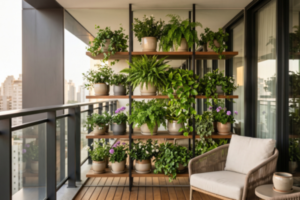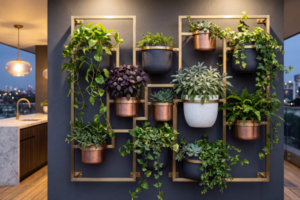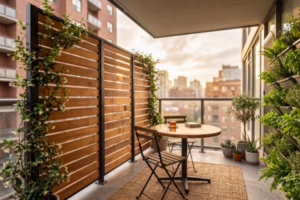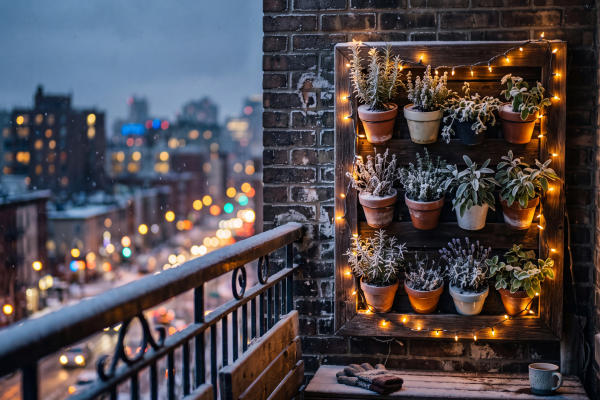
If you have ever looked at your balcony and thought it could be so much more than an empty slab of concrete, you are not alone. That feeling is exactly why so many people are turning to a balcony vertical garden for every season — a living design that changes with the calendar instead of sitting still all year.
Whether your outdoor space is narrow, wide, sunny, or shaded, a well-planned vertical garden brings it to life in a way nothing else quite does. It adds texture, color, fragrance, and even fresh ingredients right outside your door, all without eating up precious floor space.
This guide walks you through everything you need to plan, style, and refresh a balcony vertical garden for every season — from spring blooms to winter evergreens, from choosing the right frame to picking the best plants for each month. Every idea here is meant to work in real homes and real apartments, not just in photos.
Why a Vertical Garden Works So Well on a Gourmet Balcony
Most balconies are not large. That is just the reality for millions of people living in apartments or townhouses across the country. Floor space is limited, but wall space and railing space are often completely ignored. A vertical garden fixes that problem by going up instead of out, turning blank walls into living panels full of greenery, flavor, and seasonal beauty.
What makes this especially rewarding for home cooks is the gourmet side of the equation. When your garden is right there on the balcony, just a step from the kitchen, picking fresh basil for your pasta or snipping thyme for a roasted chicken becomes effortless.
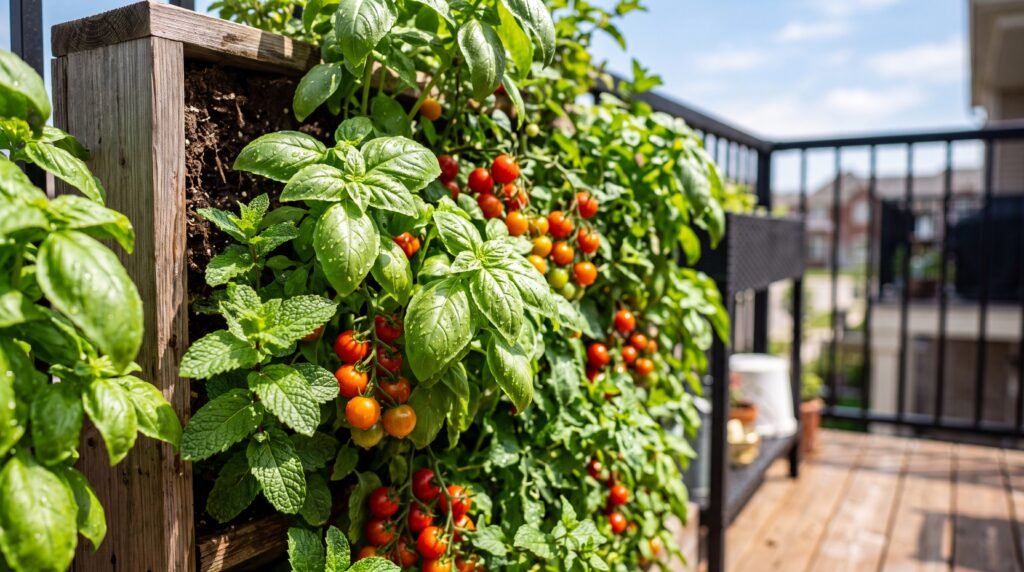
You stop relying so heavily on store-bought herbs that have already lost much of their flavor by the time they reach your grocery shelf. The difference in taste is unmatched, and over time, cooking with your own ingredients changes how you think about food entirely.
Beyond the culinary benefits, a vertical garden also changes the whole mood of a balcony. People who have made the switch consistently say their outdoor area feels more like a room once the greenery is in place. There is something about being surrounded by growing things that makes a spot feel alive and worth spending time in.
The Role of Structure in a Vertical Garden
Before choosing your first plant, think about the bones of your garden. Structure is everything. Without a solid framework, even beautiful plants end up looking messy and out of place. The most popular options for balcony vertical gardens include wall-mounted planter panels, trellis systems, pocket felt planters, and stacked modular units.
A modular vertical garden for gourmet balconies is one of the smartest ways to go. Modular systems let you reconfigure the layout as plants grow, as the seasons shift, or simply as your taste evolves. You can add a new row of herbs in spring, swap out a section for fall ornamentals, or rearrange things entirely without starting from scratch. That kind of flexibility is what keeps the setup looking considered rather than accidental.
Planning Your Gourmet Balcony Vertical Garden for Every Season
Gourmet balcony vertical garden planning for every season starts with understanding what your space actually offers. Before you buy a single planter or plant, spend a few days observing your balcony at different times of day. How many hours of direct sunlight does it get? Is it sheltered from wind or exposed? Does it face east, west, south, or north? These answers will shape every decision that follows.
Once you understand your light and wind conditions, you can start mapping out a seasonal plan. The idea is not to replant everything from scratch four times a year, but to build a foundation of perennial or long-lasting plants and then layer seasonal elements around them. Think of the perennials as the backbone and the seasonal additions as accent pieces — the way you might change throw pillows on a couch while keeping the furniture the same.
Choosing the Right Framework for Your Space
The framework you choose should match both the size of your balcony and the weight capacity of the wall or railing you plan to attach it to. Most apartment balcony walls can support lightweight modular systems without any issues, but it is always worth checking with your building management if you are unsure. Safety first, always.
Here are the most common framework types that work well for gourmet balcony vertical gardens:
- Wall-mounted panel systems: These attach directly to the wall and come in a variety of materials, from metal grids to wooden slat boards. They are great for tight balconies because they use zero floor space.
- Freestanding trellis units: These stand on their own and can be moved as needed. They work well on covered balconies where drilling into walls is not allowed.
- Railing planters with vertical extensions: These hang over the railing and often include stackable tiers for added vertical height. Perfect for trailing herbs and deep-green foliage plants.
- Felt pocket planters: These are lightweight, affordable, and easy to install. They are ideal for herbs and small edible plants, and they come in long vertical strips that can cover a surprising amount of wall space.
Mapping Out Seasonal Planting Zones
Think of your vertical garden as having three zones: the top zone, the middle zone, and the bottom zone. Light distribution varies across these areas, and so does moisture. The top of a vertical planter tends to dry out faster because it catches more sun and wind. The bottom retains moisture longer. Matching the right plants to the right zone makes a real difference in how well everything grows.
For a gourmet approach, place your most-used culinary herbs in the middle zone where they are easiest to reach for harvesting. Reserve the top zone for trailing plants or drought-tolerant varieties like rosemary and oregano. Use the bottom zone for plants that appreciate more consistent moisture, like parsley, cilantro, and certain leafy greens.
Decorating Your Vertical Garden in Spring
Spring is when everything starts fresh, and your balcony garden should reflect that energy. This is the season of soft pastels, new growth, and an almost electric sense of possibility. If you want your gourmet balcony vertical garden to really sing in spring, focus on a combination of edible flowers, early herbs, and fast-growing greens that fill in quickly and give the wall a lush, full appearance by late April or May.
Start by planting a base layer of culinary herbs that thrive in mild temperatures: basil, parsley, chives, cilantro, and dill all do beautifully in spring. These also happen to be some of the most useful herbs in the kitchen, so you get beauty and practicality in one move.
Around them, tuck in some edible flowers like nasturtiums, pansies, and violas. These add bursts of color that genuinely photograph well and also end up in spring salads, garnishes, and even cocktails.
Spring Color Palettes and Companion Planting
Color choices matter more than most people think. In spring, the visual goal is lightness — soft greens, lavender, pale yellow, and white all read as seasonal and fresh. Avoid heavy, dark foliage as the main focus during spring months. Instead, mix light-colored blooms with bright green herbs to create natural contrast.
Companion planting is also worth taking seriously in a gourmet vertical garden. Certain plants grow better next to each other, and some actually repel the insects that would otherwise damage your herbs. Basil planted near tomato seedlings (if your balcony is large enough for a small pot or two) is a classic pairing.
Chives near parsley can deter certain aphids. A modular vertical garden for gourmet balconies makes it easy to experiment with these combinations because you can rearrange individual sections without disturbing the rest.
How to Transition Your Vertical Garden into Summer
Summer brings heat, longer days, and a need for more frequent watering. It also brings the best possible growing conditions for most gourmet herbs and edible plants. Your vertical garden should be at its most productive during these months, so think about maximizing yield while keeping the look polished and well-maintained.
The star players of summer in a gourmet vertical garden are basil (especially Thai basil and Genovese basil), mint, lemon verbena, and cherry tomatoes if you have the right spot for them.
Edible flowers like zucchini blossoms, borage, and bachelor’s buttons also thrive in summer heat and add dramatic visual interest to the vertical display. Have you ever used fresh borage flowers to garnish a cold summer drink? Once you do, you will make sure there is always a patch growing somewhere on your balcony.
Watering, Drainage, and Summer Heat Management
One of the biggest challenges with vertical gardens in summer is keeping up with watering. Because the planters are stacked or mounted rather than sitting in the ground, they dry out faster than traditional garden beds. This is especially true on west-facing balconies that get intense afternoon sun. There are a few solid approaches to keep plants healthy without turning the watering routine into a second job.
Drip irrigation systems designed for vertical gardens are widely available and not expensive to set up. They connect to a standard outdoor faucet and can be put on a timer so the plants get consistent moisture every day without you having to think about it.
If a full drip system feels like too much, self-watering planters with built-in reservoirs are a good middle ground. They hold a water supply at the base that the plant draws from as needed, which dramatically reduces how often you need to water by hand.
Drainage matters just as much as watering. No herb or vegetable thrives in waterlogged soil, and poorly draining planters are one of the most common reasons gourmet balcony gardens fail in the first place. Make sure every planter has drainage holes and that there is somewhere for excess water to go — usually a drip tray or a gap that lets water fall to the floor drain.
Decorating for Fall: Warmth, Texture, and Harvest Energy
Fall is genuinely one of the most exciting seasons for a gourmet balcony vertical garden. The intensity of summer eases off, temperatures become more forgiving, and there is a whole palette of warm colors — burnt orange, deep red, golden yellow, and rich plum — that can bring real drama to your balcony design.
The goal in fall is not just to keep growing, but to lean into the seasonal mood and make the balcony feel like a natural extension of the harvest season.
From a culinary standpoint, fall is perfect for transitioning your vertical garden toward heartier herbs and greens. Kale, Swiss chard, arugula, and spinach love the cooler temperatures of late September through November and will keep producing long after summer crops have given up. Sage, oregano, and thyme also carry on beautifully into fall and pair naturally with the warming, rich flavors of autumn cooking — think roasted squash, braised meats, and hearty soups.
Adding Seasonal Decor Without Crowding the Plants
One of the nicest things about a vertical garden on a balcony is that it becomes a natural backdrop for seasonal decorating. In fall, you can add a few non-plant elements without cluttering the area or harming the garden.
Small decorative gourds tucked into a lower shelf, a string of warm Edison-bulb lights along the top edge of the frame, or a wooden sign with a harvest saying all add character without competing with the plants.
Keep the decorating balanced. The plants should always be the main event — the decor is there to support them. Too many ornamental additions can make the setup feel busy and take away from the clean, curated look that makes a vertical garden so appealing in the first place.
Keeping Your Vertical Garden Beautiful in Winter
Winter is where most balcony gardeners give up, and that is completely understandable. The cold, the shorter days, the temptation to just cover everything up until spring — it is a common response.
But a well-designed gourmet balcony vertical garden for every season does not have to go dormant in winter. With the right plants and a few smart adjustments, your vertical garden can remain a living, attractive feature of your balcony even in the coldest months.
The key is choosing cold-hardy plants that provide visual interest even when most things are not actively growing. Evergreen herbs like rosemary, sage, and thyme are workhorses here — they look good year-round, hold up in the kitchen all winter long, and require very little maintenance in cold weather.
Ornamental cabbages and kale in shades of purple and cream add striking color to the winter garden and are completely edible. Certain types of ornamental grass add texture and movement when everything else feels still.
Protecting Your Plants and Planters in Cold Weather
If you live in a region that gets hard freezes, you will need to take some steps to protect both your plants and the containers themselves. Ceramic and terracotta planters can crack when water inside them freezes and expands. For winter, switching to lightweight plastic or fabric planters is a wise move for exposed sections of the garden.
For plants that are borderline cold-hardy for your zone, a few layers of burlap or horticultural fleece wrapped loosely around the section at night can make a real difference. The goal is not to keep the plants warm exactly, but to shield them from the most extreme temperature swings — the kind that happen when temperatures drop sharply overnight and rise again during the day. This freeze-thaw cycle is often more damaging than sustained cold.
FAQ: Your Questions About Gourmet Balcony Vertical Gardens, Answered
A few quick answers to the questions that come up most often when people start planning their own setup.
What are the best herbs to grow in a gourmet balcony vertical garden?
Basil, rosemary, thyme, chives, mint, parsley, and oregano are consistently the most useful and reliable choices for a gourmet vertical garden. Basil is the star of summer, while rosemary and thyme carry the garden through fall and winter beautifully. Mint is worth growing in its own contained planter because it spreads aggressively if not controlled.
Can I grow vegetables in a vertical garden on a small balcony?
Absolutely, though the key is choosing the right varieties. Compact tomatoes like Tumbling Tom or cherry tomato cultivars do well in vertical planters with enough sunlight. Lettuce, arugula, spinach, radishes, and small pepper plants all work well in vertical setups. Larger vegetables like full-size squash or corn are not practical in this format, but there is plenty of room for a genuinely productive edible garden.
How do I water a vertical garden without making a mess on the balcony below?
Drip trays under each planter section catch excess water before it reaches the neighbors below — an important consideration in any apartment building. A drip irrigation system on a timer is the most hands-off approach, but self-watering planters with integrated reservoirs are another clean option. Watering early in the morning is also helpful because it gives the plants time to absorb moisture before the heat of the day, reducing how much actually drips through.
How often should I replace the soil in a vertical garden planter?
Plan on refreshing the soil in each planter at least once a year, ideally at the beginning of spring. Over time, potting mix compacts, loses nutrients, and may develop issues with drainage. A complete soil refresh at the start of the growing season sets the stage for a much healthier, more productive garden. Between full refreshes, top-dressing with a thin layer of compost every month or so helps maintain soil health without a full replant.
Is a modular vertical garden for gourmet balconies expensive to set up?
The initial investment varies widely depending on the system you choose. Basic felt pocket planters can run as little as twenty to thirty dollars for a full panel. Mid-range modular systems with plastic or powder-coated metal frames typically fall between eighty and two hundred dollars. Premium systems with built-in irrigation and high-end materials can go higher.
The good news is that the ongoing cost is low — seeds and starter plants are inexpensive, and the garden pays for itself quickly if you are regularly harvesting fresh herbs and greens that you would otherwise buy at the store.
What is the best direction for a balcony vertical garden to face?
South-facing balconies get the most sunlight and are ideal for heat-loving plants like basil and tomatoes. East-facing balconies offer morning sun and afternoon shade, which works well for herbs that do not like intense heat.
West-facing balconies get the hot afternoon sun, so heat-tolerant plants with good drought resistance thrive there. North-facing balconies are the most challenging for gourmet gardens, but shade-tolerant herbs like mint, chives, and parsley can still do well with supplemental grow lighting if needed.
Putting It All Together: A Garden That Grows With You
By now it should be clear that a balcony vertical garden for every season is never really “finished.” It keeps talking back to you — through what thrives, what struggles, and what you crave from your own kitchen next. That back-and-forth is exactly what makes it worth starting.
So take the pressure off yourself: you do not need every zone planned before you begin, just one wall panel and the willingness to watch it for a season. Everything else falls into place once you are living with a garden instead of just imagining one, and a single basil plant has a way of turning into a spring palette, a summer harvest, and a rosemary sprig you reach for on a cold December night.
If this guide sparked some ideas, keep exploring — there is more here on container gardening, outdoor living design, and seasonal cooking with homegrown ingredients. And if you already have your own tips for decorating a balcony vertical garden, drop them in the comments below.