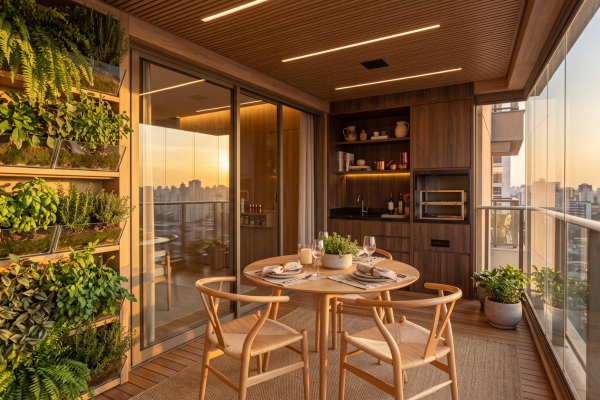
Vertical gardens with wood and glass are having a real moment right now, especially for anyone trying to squeeze more life into a small outdoor space. It makes sense, since most of us want that cozy, green touch on the balcony without giving up the little floor space we have.
Wood brings the warmth, and glass keeps everything feeling open and bright instead of boxed in. Put the two together and you get a look that feels natural, modern, and surprisingly easy to live with.
In this guide, we will go through layout ideas, the right materials to use, easy plant picks, and a few lighting touches that pull the whole thing together. Practical stuff you can actually put to use on your own balcony.
What Makes Vertical Gardens with Wood and Glass So Popular Right Now
Vertical gardens with wood and glass have caught on because they answer two needs at once. People want more greenery around them, but they also want their balcony to look put together, not like a random collection of pots. Wood brings warmth and a natural feel, while glass adds a light, airy touch that keeps the space from feeling boxed in.
Think about a neighbor who turned her narrow apartment balcony into a mini outdoor kitchen last summer. She had barely six feet of width to work with, yet by installing a wood-framed vertical planter against one wall and adding a glass partition on the open side, she created a spot that felt private and green without losing a single square foot of floor space. That is the kind of transformation people are searching for.
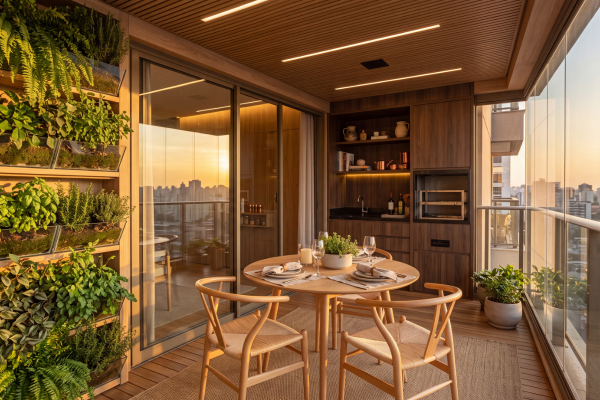
This style also photographs beautifully, which matters more than people admit. A well-designed modular vertical garden for gourmet balconies gives you that lush, restaurant-patio feeling right outside your kitchen window. And because wood and glass are both durable outdoor materials when treated properly, this is not just a passing trend, it is a practical long-term choice for anyone who cooks and entertains outside.
Why Homeowners Choose This Combination Over Traditional Planters
Traditional railing planters or stacked pots work fine, but they take up floor space and often look cluttered after a season or two. A built vertical system solves that by growing upward instead of outward. Glass panels, whether used as a backdrop or a windbreak, let sunlight pass through to the plants while still giving you some shelter from wind, which matters a lot if your balcony faces a busy street or an open exposure.
Planning Your Gourmet Balcony Layout Before Adding Greenery
Before you buy a single plank of wood, it helps to map out how you will actually use the balcony. Are you grilling out there every weekend, or is this more of a coffee-and-quiet-evening spot? The answer changes where the garden wall should go and how much space you can dedicate to it.
A smart layout usually places the cooking or dining zone on one side and the greenery on the other, using the vertical gardens with wood and glass structure almost like a room divider. This keeps splashes and smoke away from your plants while still letting the greenery act as a backdrop for photos or dinners with friends. Measure twice here, because balcony space is unforgiving and every inch counts.
Balcony layout planning should also account for water access and drainage, since a living wall needs regular watering and you do not want runoff pooling near your grill or seating area. Here are a few things worth checking before you finalize your plan:
- Weight limits your building allows for balcony structures and planters
- Distance from the grill or cooktop to any wood elements, for fire safety
- Direction your balcony faces, since south and west exposures get more heat
- Whether your HOA or landlord has rules about permanent installations
Measuring for a Modular Vertical Garden for Gourmet Balconies
Modular systems are forgiving because you can add or remove panels as your space or budget changes. Start with one section against your strongest wall, then expand once you see how it holds up through a season of weather.
Choosing the Right Wood for Outdoor Vertical Structures
Not all wood behaves the same way once it faces rain, sun, and humidity, so this decision matters more than people expect. Outdoor wood planters and vertical frames need to be built from species that naturally resist rot and insects, or they need a serious sealing routine to survive more than a year outside.
Cedar and teak are the most common choices for good reason. Cedar is lighter on the wallet and has a lovely reddish tone that ages into a soft silver gray if left untreated, which some homeowners actually prefer for that weathered look. Teak costs more upfront but handles moisture almost effortlessly and barely needs maintenance beyond an occasional oil treatment.
If budget is tight, pressure-treated pine dressed up with a quality outdoor stain can also hold its own, though you will want to reapply protective coating every year or two. A friend of mine used reclaimed pallet wood for his first vertical garden frame, sanded and stained it himself, and it lasted three full seasons before needing any real repair.
That kind of DIY approach works well if you enjoy weekend projects and do not mind a bit of trial and error.
- Cedar: affordable, naturally rot-resistant, ages beautifully
- Teak: premium option, extremely low maintenance, higher upfront cost
- Pressure-treated pine: budget-friendly, needs yearly sealing
- Reclaimed wood: character-rich, requires more prep work upfront
Using Glass Panels to Add Light and Structure
Glass does more work on a balcony than most people realize. Beyond looking sleek, tempered glass panels act as wind buffers, protecting delicate plants and keeping your dining candles from blowing out mid-dinner. They also bounce natural light around, which helps plants that might otherwise sit in partial shade from railings or overhangs.
Glass panel wind protection has become a specific search term for a reason, since many apartment balconies sit high enough that gusts are a real nuisance. Installing a clear or slightly frosted glass section beside your vertical wood garden lets you keep the view open while still shielding your herbs and small plants from getting knocked around every time the weather shifts.
When picking glass, always confirm it is tempered safety glass rated for outdoor and elevated use, since regular glass can shatter unexpectedly under stress or temperature swings. Framing the glass in matching or complementary wood ties the whole look together, making the transition between materials feel intentional rather than mismatched.
Combining Materials Without Making the Space Feel Busy
The trick to blending wood and glass well is restraint. Pick one dominant wood tone and stick with it across your planters, trim, and any furniture, then let the glass stay as simple and clear as possible so it does not compete visually with the greenery.
Best Plants for a Wood and Glass Vertical Garden
Once your structure is up, plant choice makes or breaks the final look. For a gourmet balcony garden, most people lean toward a mix of herbs they will actually use in the kitchen alongside a few trailing or flowering plants for visual softness.
Herbs like rosemary, thyme, and oregano do particularly well in vertical planters because they are drought tolerant and do not mind a bit of neglect on busy weeks. Basil and mint also thrive but need more consistent watering, so place them where you will notice if the soil dries out. For color, trailing petunias, sweet potato vine, or even small strawberry plants add a pop of life against the wood tones without demanding constant care.
If your balcony gets limited direct sun, consider ferns, pothos, or other shade-tolerant greenery mixed in with a few sun-loving herbs closer to the brightest section. Rotating a few pots seasonally keeps the garden feeling fresh, and it gives you an excuse to experiment with new varieties each year rather than committing to the same layout forever.
- Rosemary and thyme for low-maintenance, kitchen-ready herbs
- Basil and mint for cooking, with regular watering
- Trailing vine plants for a softer, cascading look
- Shade-tolerant ferns for balconies with limited sun exposure
Lighting and Finishing Touches for Evening Use
A balcony that only looks good during the day is only half finished. Outdoor balcony lighting ideas for this style usually center on warm, low string lights woven through the upper part of the vertical garden, or small solar spotlights tucked among the plants to highlight texture after dark.
Wood surfaces glow nicely under warm white or amber lighting, so avoid cool blue tones that can make the space feel clinical instead of relaxed. A dimmer switch, if you have access to power out there, lets you shift from bright task lighting while cooking to a softer mood for dinner later.
Candles in glass hurricane covers also fit the theme well, since the glass keeps flames protected from wind while echoing the material used in your garden structure.
Little touches matter here too. A woven outdoor rug, a couple of cushions in earthy tones, and simple wooden serving trays all reinforce the natural feel you built with the vertical garden itself. Have you noticed how the best-looking balconies rarely have more than two or three colors repeating throughout? That kind of restraint is what makes a space feel finished rather than cluttered.
Maintenance Tips to Keep Everything Looking Its Best
Wipe down glass panels every couple of weeks to prevent water spots and pollen buildup, and check wood joints twice a year for any loosening from temperature changes. A quick reseal of exposed wood edges before winter goes a long way toward avoiding cracks come spring.
Budget-Friendly Ways to Get the Look
Not everyone has a big budget for a full balcony makeover, and that is completely fine. DIY vertical garden ideas have exploded online because people realized you do not need custom carpentry to get a similar effect. Repurposed wooden crates stacked and secured to a wall, paired with a single glass panel bought secondhand or from a salvage yard, can deliver eighty percent of the look for a fraction of the price.
Shopping end-of-season sales at home improvement stores often turns up discounted cedar boards or clearance planters that work great for this kind of project. Another approach is phasing the build over a few months, starting with the wood structure and adding the glass element once you have saved up, rather than trying to do everything at once.
This staged method also gives you time to see how your plants actually grow and adjust the layout before committing to a final glass installation.
Community groups and local buy-nothing pages are surprisingly good sources for reclaimed wood, old window panes, and even leftover garden supplies from other people’s projects. It takes a bit more patience than ordering everything new, but the savings and the character you gain are usually worth the extra legwork.
Frequently Asked Questions About Vertical Gardens with Wood and Glass
People searching for this topic online tend to ask a similar set of practical questions before starting their own project. Below are answers to the ones that come up most often, based on common concerns homeowners bring up when planning a balcony renovation.
How much weight can a balcony typically hold for a vertical garden
Most residential balconies are built to hold somewhere between 50 and 100 pounds per square foot, but this varies by building and age, so it is best to check with your property manager or a structural professional before installing anything heavy. Soil, wet plants, and the wood frame itself add up faster than people expect.
Can I install a wood and glass vertical garden in a rental apartment
Yes, in many cases, as long as you choose a freestanding or modular system rather than something drilled directly into the building structure. Many renters use weighted bases or tension-mounted frames that hold everything securely without leaving permanent marks.
How often do I need to water a vertical garden on a balcony
This depends on your plant choices and sun exposure, but most vertical setups need watering two to three times a week during warmer months, sometimes daily if herbs like basil are included. A simple drip irrigation kit can take the guesswork out of this if you travel often or have a busy schedule.
Does treated wood need to be sealed every year
Pressure-treated wood generally needs resealing every one to two years depending on your climate, while cedar and teak can often go two to three years between treatments. Coastal or high-humidity areas tend to require more frequent maintenance regardless of wood type.
What is the average cost of building a gourmet balcony with a vertical garden
Costs vary widely based on size and materials, but a modest DIY setup with reclaimed wood and a single glass panel might run a few hundred dollars, while a fully custom professional installation with premium teak and tempered glass can reach several thousand. Starting small and expanding over time is a reasonable way to manage the expense.
Bringing It All Together on Your Own Balcony
Designing a balcony around vertical gardens with wood and glass is really about finding the balance between function and feeling. You want a space where you can cook, sit, and unwind, all while surrounded by a bit of greenery that makes the whole thing feel alive rather than just another outdoor storage spot.
Start small if you need to. Pick one wall, choose a wood you love, and add a single glass element to test how it feels before committing to a bigger build. Most of the best balcony transformations happened one season at a time, not all at once, and there is no rush to get everything perfect right away.
Whatever direction you take, the goal is a space that reflects how you actually want to spend your evenings outside. Grab a coffee, look at your balcony with fresh eyes, and picture where that first wood panel might go.
If this guide helped you picture your own project, take a look at our other articles on outdoor design for more ideas, and feel free to leave a comment below with questions or photos of your progress. We would genuinely love to hear how your balcony turns out.